

Archive for the ‘Resistance’ Category

Free e-book: The 5 Things You Need To Know About Resistance

Tuesday, August 17th, 2010

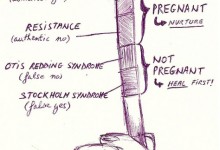
With this e-book I offer an alternative to the way we have been taught to treat resistance.

To summarize what this e-book is about:

1. Resistance is a good thing; it’s the energy that fuels change;

2. It’s about emotions, and in the first place: your own;

3. It’s about relations, first on trust and then on agreement;

4. It’s about platforms – a platform for emotions; not a burning platform;

5. It is about you – up close and personal.

Here’s the deal:

- If you like it, share it.
- If you think it can be improved, let me know.

I hope you will enjoy reading this e-book as much as I did making it.

Newspapers are Solving the Wrong Problem

Monday, August 9th, 2010

We are all quite good at creating and sustaining comfort-zones, because this is what makes life predictable. But when we do that at as a group or an organization, disasters can happen. Newspapers are next on this list.

Many project teams isolate themselves in their own cocoons, having little contact as possible with what is, for them, outer space. In the past I have called this project cocooning. Recently I have come to think of it as shop floor fear.

The truth is that any sign of skepticism puts competent teams at the edge of their comfort zone. The resistance they meet is mostly countered with … resistance. By virtue of their ‘shared values’ project teams counter feedback with arrogance. That is why large scale projects fail even when all of the measurements, indicators and dashboards in the green zone.

Group-Think

When Irving Janis discovered this mechanism he defined it as group-think. It occurs “when the members’ strivings for unanimity override their motivation to realistically appraise alternative courses of action.”

Group-think has led to disasters such as failure to anticipate the Japanese attack on Pearl Harbor (1941); the Bay of Pigs fiasco (1961) when the US administration sought to overthrow Cuban Government of Fidel Castro; and the prosecution of the Vietnam War (1964-67) by President Lyndon Johnson. Lend me your ears and I can top this list with some juicy stories of failed large scale projects.

Testing Group-Think

Group cohesion is the comfort zone at stake because that is the value that seems to be more important thanb common sense. To make groupthink testable, Janis devised eight symptoms indicative of groupthink:

1. Illusions of invulnerability creating excessive optimism and encouraging risk taking.
2. Rationalizing warnings that might challenge the group’s assumptions.
3. Unquestioned belief in the group’s morality and ignoring the consequences of their actions.
4. Stereotyping those who are opposed to the group as weak, evil, biased, spiteful, stupid, etc.
5. Direct pressure to conform placed on members who question the group, in terms of ‘disloyalty’.
6. Self censorship of ideas that deviate from the apparent group consensus.
7. Illusions of unanimity among group members, silence is viewed as agreement.
8. Mind guards — self-appointed members who shield the group from dissenting information.

When we test the Newspaper industry against these criteria, they score very high, so we may be looking at a disaster waiting to happen.

Preserving the Problem

NYU professor Clay Shirky has a clear view on why group-think exists. According to him, complex solutions (like a company, or an industry) can become so dedicated to the problem they are the solution to, that often they inadvertently perpetuate the problem: ‘Institutions will try to preserve the problem to which they are the solution.

Shirky refers to how the media industry is incapable of changing because they are solving the wrong problem. Let’s face it: newspapers are the solution to the problem of … news gathering and news distribution. AND THAT PROBLEM NO LONGER EXISTS.

Distribution is the Wrong Pot to Piss In

In an earlier sketch with Seth Godin I have argued that it’s about content, not printing or distribution. The Shirky Principle, which results from the mechanics of group-think seems to confirm my analysis.

Nowadays if we all want news we simply go to Google to get it.  Who published it isn’t nearly as important to readers any more.  Nor is the packaging. There are 3 strategies for newspapers to react to the downturn in their business:

NO PROBLEM: This is where most newspapers and magazines are today: Do nothing unless the competition forces you to. Paper is the main business and the internet, well… because we have to.

EXTRAPOLATING THE PROBLEM: these companies know that printing will be out of business some day, so they just make the technical switch to a new medium (the internet and e-readers). However, they have fallen in love with the problem that no longer exists: they still view themselves as gatherers and distributers of news (and what sucks even more: they still package the news on these e-readers in ‘pages’ and ‘issues’ – a constraint that was due to the printing press!)

REINVENTING THE PROBLEM FROM SCRATCH: Today’s problem is an abundance of news and a need to make sense of it all. So the future is to be a platform for sense-making. This will require the newspapers business to let go of their attachment to the producer-consumer model. Only then will they be able to search for new revenues and growth.

PS: Have a look at another sketch with Jef Staes to see how Belgian Media (and to be honest: the complete Belgian Economic and political landscape) are a good example of the mechanics of group-think.

Creativity as a Resistance Buster

Tuesday, July 27th, 2010

The way I approach resistance is influenced by the way I look at organizational change management. I see resistance as a crucial ingredient that is needed to make a change happen. Resistance fuels change. Without it, there is no change.

I get very suspicious whenever I see advertisements for consulting companies or training courses claiming they will help you to reduce or avoid resistance. They create the false expectation that organizational change is a mathematical exercise.

Emotions are the Only Way Out

They avoid to make sense of the emotional responses. Instead of seeing them for the fuel and energy they provide, they mistake them for a failure. Then, they move in the opposite direction, as if they were reading a road sign upside down.

Here is what that road sign says: resistance is emotion; and emotion is the ‘motion’ that is needed to move through the dip of change. Of course it is a bumpy road, but it is the only way through.

Lateral Thinking as an Example

One example to go forward is by looking at these reactions like Edward De Bono approaches creativity. De Bono discovered that logical, linear and critical thinking has limitations. It is primarily concerned with judging and seeking errors. He calls this black hat thinking. The problem is that it scares us so much that we want to move away from it. But the opposite it true.

De Bono’s approach is to appreciate the value of this negative thinking, instead of avoiding it. Next, he stimulates the other thinking hats to come to the surface. As a result of respecting the negative thinking and going through, one ends up with a rich palate fueling a solution for the situation at hand:

  • Negative judgment (black hat) – logic applied to identifying flaws or barriers, seeking mismatch
  • Neutrality (white hat) – considering purely what information is available, what are the facts?
  • Feeling (red hat) – instinctive gut reaction or statements of emotional feeling (without justification)
  • Positive Judgment (yellow hat) – logic applied to identifying benefits, seeking harmony
  • Creative thinking (green hat) – provocation and investigation, seeing where a thought goes
  • Process control (blue hat) – thinking about thinking

The bottom line is that we need to go through the roller-coaster of our own emotions in order to have the respect and authority to lead others through the organizational change.

The Math Versus The Path

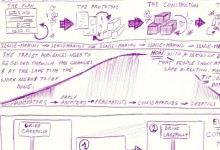
The mathematical or linear approach assumes a straight line from the present state to the future state. This line is best described as ‘Analyze – Think – Change’.

Inevitably emotional side tips us and our beliefs into the cycle of change as described by Elisabeth Kübler Ross. Turns out that in times of change motivation is more important than math.

The nature of things is ‘See – Feel – Change’. The feel part, according to Kübler Ross is a rollercoaster taking us through the dip of denial, anger, bargaining, depression and acceptance. Trying to avoid those emotions is like cooking without heat: ingredients won’t fuse.

Resistance Yourself!

Monday, June 21st, 2010

Most of us have two lives. The life we live, and the unlived life within us. Between the two stands Resistance.
Steven Pressfield

Coming to terms with the very ‘resistance’ I have been studying and writing about for the last few years: it is all about the same thing.  It is all about me, myself and I. And that’s bad news for my ego.

Chameleon Law

Earlier I have mentioned the 1944 unfinished novel Mount Analogue by René Daumal. It describes the travel of a company of eight, who set sail in the yacht Impossible to search for Mount Analogue, a solid, a geographical place that “cannot not exist.”

The story of Mount Analogue is about making something happen that all people around you say is impossible and ridiculous.  In this novel about the expedition to a mythical mountain that reaches from earth to heaven, Daumal mentions the chameleon law, which he describes as the inner resonance to influences nearest at hand (“la résonance aux plus proches affimations” if you happen to speak French). As the protagonist of this tale is in the vulnerable starting phase of this expedition, he discovers how he is prone to social pressure and how difficult it is to commit to something before knowing how.

Amygdala

Mount Analogue is about inner doubts and how they prevent us from seeing the other 99% of the possibilities that are at hand in each situation. With rational thinking and conventional ‘common sense’ we easily fall prey to the chameleon law. Scratch off the surface of the chameleon and you will find Fear driving its actions.

The chameleon law as it was coined in 1944 by Daumal didn’t go mainstream until Daniel Goleman – more than 50 years later – published Emotional Intelligence.

All of a sudden the reptile brain – also known as the amygdala – went mainstream. The amygdala  plays a key part in our fight-flight responses to unpleasant sights, sensations, or smells. A great part of our basic instincts such as anger and anxiety are emotions activated by the amygdala.

Lizard Brain

But it is only until recently that the functioning of this reptile part of our brain has been translated in terms of organizational change.

In his latest book Linchpin Seth Godin refers to the chameleon law as the voice in the back of our head telling us to back off, be careful, go slow, compromise. He calls it the lizard brain. It is writer’s block and every project that ever shipped late because people couldn’t stay on the same page long enough to get something out the door.

He uncovers the lizard brain as the motor of mediocrity and the main responsible for late launches, middle of the road products and procrastination. It is the force that causes you to fit in instead of standing out.

Redefining Resistance

Godin got the inspiration for the lizard brain from Steven Pressfield – who refers to it as “the resistance”. Hereby Pressfield radically redefines the term resistance by taking it from a general condition that can easily be diagnosed in other people to the identification of a force we all have to struggle with.

In his book The War of Art: Break Through the Blocks and Win Your Inner Creative Battles
, Pressfield states: “Resistance seems to come from outside of ourselves. We locate it in our spouses, jobs, bosses, kids.” But in truth, as he continues: “Resistance arises from within. It is self-generated and self-perpetuated. Resistance is the enemy within.”

The Moral for Organizational Change

Organizational change projects are mostly about creating a situation that does not yet exist. A situation, a project or any other expedition is “talked into existence”. With every word you speak, a seed is planted that can give birth to a new reality. Karl Weick refers to this as the process of Enactment to denote that certain phenomena (such as this crazy expedition, or your own project for that matter!) are created by being talked about.

Slowly but surely – if you are persistent enough – your ideas translate to words, your words translate to actions and our actions result into tangible outcomes.

The lizard-type of resistance is the biggest enemy during organizational change efforts, because you are shaping the path for a future that has no gravity in the present.

As you can see from the drawing, the classic way of managing resistance will only get you half way. The last part of the change curve is about fighting the chameleon law from taking over.

Turning Pro

You have to be crazy enough and stubborn enough to endeavor your objectives against all odds of the chameleon law.

It is the very process of setting one foot in front of another and then: keep on climbing. Steven Pressfield calls this turning pro: “The amateur believes he must first overcome his fear; then he can do his work. The professional knows that fear can never be overcome. He knows there is no such thing as a fearless warrior or a dread-free artist”

An organizational change project is a mountaineering expedition of the inner mind as much as it is about delivering a project according to a certain methodology. It is as much an organizational process (Managing resistance as we know it) as it is an inner struggle for fueling our own commitment to an expedition with an un-rational (i.e. ‘rationally ‘unreachable’) objective (Managing resistance inside yourself).

But the hardest part of the battle is inside our own heads. It’s the ability to pursue a dream.

Horror, the Ultimate Learning

Sunday, May 2nd, 2010

Buzzard attacks are rare, but when they occur on the scalp of an organizational change practitioner it leaves a scar. Five seconds of horror and two lessons for life: Respect and Experience.

I am a fan of animal metaphors in my blog posts, be it ducks, elephants or a complete ecosystem of a pond. This post is quite similar, but it has a little twist from a Birds perspective. Indeed. In the exact sense and to the same horrifying extent as Hitchcock’s 1963 movie, where birds of all kinds suddenly begin to attack people.

As you can see from the above picture, I had my dose of Hitchcock today. I went for a morning run when all of a sudden a buzzard swooped from behind and attacked me with its talons. But I am alive and well, no stitches – just a tetanus renewal and full box of antibiotics for the coming week.

Timesaver: Sports & Primal Scream Therapy

Apparently buzzards always attack from the back. As I read through some buzzard attack incidents – I found that mine was exactly the same: a bang on the back of my head and as I looked up the buzzard was already preparing its next attack. It missed that second attack probably due to my primal screaming and gesticulating. By the third attack I managed to grab a piece of wood and noticing that, it past by and landed on a branch, finishing our encounter with some screams of victory.

Revenge or Respect?

I wouldn’t be blogging about this incident if I hadn’t procrastinated some sense out of this experience throughout the day. When a bird of prey tries to pick your brains there must be a lesson in there.

The takeaway – apart from the vaccination – for Organizational Change Practitioners is the fact that any time of the day you may be thinking of yourself as minding your own business and doing no harm, when all of a sudden horror strikes. You are puzzled and instantly your sense-making mind starts to produce a reality to match your indignation. Like me you may be advertising your innocence and receive lots of sympathy.

Fact is that I was a threat to the bird and that – from its perspective – the bird did what it had to do: it gave me hell. I was a foreign element disturbing the bird’s status quo. As long as I fail to see this, I will continue to be in the right. Indignation is the force that puts me in the right, and since the bird cannot post its opinion – not even on Twitter – that’s where this game will end: shared disgruntlement powered by one man’s indignation. Sounds familiar?

How about suspecting myself first? For instance: I now learned about the breeding season; I investigated comparable incidents; looked at the birds motives, etc.  As a result I can now invest in a hat or better even: avoid the territory this time of the year. Knowing that I cannot control the bird, ‘trying harder to be right’ will not help.

Instead, approaching the incident with respect is a better response; a responsible one. The result: I am now better equipped and  “able to respond” to the situation at hand (i.e. the real meaning of the word ‘responsible’).

You Never Know Until You Go

A second lesson I can take away from today’s adventure is the fact that you never know what will happen until you do something. As Tom Peters is often quoted: “Implementation is the last 99%”.

The point is that I could prepare my run with all of my knowledge but would never ever be investing time, money or manpower into preventing head injuries from buzzards. And still, reality hit me and proved me wrong. That is why preparation and plans are good as long as they are a conversation in the first place and NOT a document that reads between the lines “you can now stop thinking”.

Most of the times though we see people blindlesly carrying out a plan even when the circumstances are screaming for course adjustment.  Good planning may have saved a skinned knee but never would have saved my scalp today. Primal scream course correction prevented me from more than one head injury. Could I have prevented the injury altogether? No way. That part is called: Learning.

The part that is called Experience is scratched on my scalp. I take it with me wherever I go. It is the ultimate learning.

Elephants! Everywhere I look!

Monday, March 8th, 2010

Forget the cheese and the mice, organizational change management just entered a new era: that of elephants and riders. The Heath brothers published a ground-breaking book on our core business.

And the expectations were high. First, because their previous book Made to Stick was a great hit for anyone involved in communication.

Second, because I judged ‘how are they going to pull that one off, without a proven track record of publishing in our field of expertise’? Let’s face it: they are not Kotter, Block, Schein, Weick or Blanchard. So I was a little skeptic.

Compelling Style

And they proved me wrong, by every turn of the page. As we could expect, this book is well engineered from a communications point of view. They use strong and compelling stories throughout the book and – like in their previous best seller – they use ‘clinics’ to illustrate the framework they are exposing. So that’s already an A from an educational and storytelling point of view.

What about the content?

So far so good. But what about the content? Before ordering the book I felt like one of the organizational change practitioner’s on LinkedIn paraphrased it: “this book seems like it’s not going to offer me anything better than the proven techniques put out there by experts in change management.” Some other colleagues stated “this book is not transformative“.

Come again? Not transformative? My colleagues refer to the fact that some of the examples cited in the book have been used before in other change literature. Unfortunately they fail to see that the authors present a framework that is clearer than ANY methodology or phase-model I have ever seen in this area.

The authors use the analogy of an elephant and its rider. The rider represents the rational and logical. The Elephant, on the other hand, represents our emotions, our gut response. They are two parts of the human mind and the premise of the book is that change management initiatives need to address both rider and elephant in order to change. The content of the complete book is based on this metaphor:

STEP ONE: DIRECT THE RIDER
- Find the Bright Spots
- Script the Critical Moves
- Point to the Destination

STEP TWO: MOTIVATE THE ELEPHANT
- Find the Feeling
- Shrink the Change
- Grow Your People

STEP THREE: SHAPE THE PATH
- Tweak the Environment
- Build Habits
- Rally the Herd

Elephants … Once you start seeing them

Below is an early note that I scribbled while I was reading the book. On this note I visualize that the rider is analytic and sees a logical straight line from the present state to the future state. This line is best described as ‘Analyze – Think – Change’. The elephant on the other hand – representing the emotional side – tips into the cycle of change as described by Elisabeth Kuebler Ross.

the rider and the elephant in the cycle of change

This is a natural process that all of us go through when we are confronted with any change. The point is that people – or rather their elephants – need time to make sense of the change.

Meanwhile, have a look at the rider anxiously holding on to that straight line. Turns out that in times of change motivation is more important than math.

Transformation: from mice to elephants

The real reason why this book is a gem is because the authors practice what they preach: they point out that you don’t have to be a CEO, a president or a prime minister to bring about effective change. If you look for solutions that are as complex and as big as the problem (which analysts often do) you will get paralyzed. Instead, Chip and Dan Heath advice to shrink the change and adopt the Flylady strategy, fighting chaos with five minute room rescues. (by the way, she defines CHAOS as: Can’t Have Anyone Over Syndrome)

Second, the authors point out that what often looks like a people problem turns out to be a situation problem. On multiple occasions they cite Wansink’s research on Mindless Eating. The point here is that Dinner control starts with plate control. And you often have more tools available than you think: small tweaks to the environment that yield big results.

Third, the Heath brothers take a positive approach and this may be the most groundbreaking point for our field of expertise. Until now our focus has been solely on resistance and how to reduce it. In other words: focusing on the problem and looking at what is withholding change. Instead the focus should be on the bright spots the authors say. Resistance is a symptom and not a cause! Stop looking at the mice. Focus on the elephant!

This book dramatically improves your diagnosis of so-called resistance and puts it in the framework of resilience. And when you change the way you look at things, the things you look at change: from resistance busting to resilience building. And that is why I am convinced that it will transform our profession.

Meet my Dad

Sunday, February 28th, 2010

What is the value of feedback when I can’t frame it, understand it or act upon it? Will I be labeled ‘resistant’ if I ask to reframe it over and over again? Feedback – yes but… feedback that is not actionable and measurable in my world will not empower me.

Blessed with a pair of craftsman hands, a good sense of humor and a healthy dose of common sense, my dad challenges me to widen my perspective from time to time. And he beats any management guru, scholar or business school with the advice that he gave me upon graduating:

“Do right and fear no one.”
- my dad

Kyoto & Copenhagen

Recently my dad installed a new condensing boiler and the system is said save a lot of energy compared to his 30 year old oil boiler. As one thing leads to another, my dad soon started looking for a measure. How much am I saving compared to my old boiler? Although you wouldn’t allow my dad to join the Davos, Kyoto or Copenhagen conferences his quest is one of high importance and high direct impact on current levels of energy spending. The question is the following: ‘How can I see the Euro amount of energy I am spending?’.

Struggle for Meaning

So here is what we did: we called the gas distribution company and asked how we can track our spending in Euro. Turns out that it was the first time they were confronted with this question. But after a few minutes the helpful helpdesk correspondent managed to get an amount of Euro Per KiloWatt-hour.

Unfortunately there is no such thing as a KiloWatt-hour meter on our consumer side. We do have a meter, but it reads volume (cube-meters). It would take a simple conversion with a factor 10 to make the calculation. However, this would not be a good measure for monitoring the energy spending because there are about 10 other parameters that influence the final invoice.

The Whyway

Contrasting this simple question to the TV news reports on Copenhagen, Kyoto and Davos I imagined a Yes Men scenario: stating the obvious question in the middle of a powerful crowd of leaders who are trying very hard to look the other way.

My dad is asking for a simple dashboard to monitor his energy spending; stating that he, his neighbors and every family can reduce 25% of their energy spending.  If only they had a proper dashboard to monitor. Like the dashboard of a car, the display of a gasoline pump or simpler: the price tags in a grocery store.

So we rang the gass company about three times until… Well. Until it felt wrong. We felt like behaving annoying and offensive. Embarrassed. Uncomfortable. That’s the price you pay for asking WHY too many times.

In his 2004 bestseller The Seven Day Weekend, management guru Ricardo Semler stesses the importance of asking why. It is one of the most important mechanisms for navigating out of the control-zone and back into the area of what matters most. In his company SEMCO, they even have a name of it: they call it the Whyway.

But it takes guts and perseverance according to Semler:

“Ask why. Ask it all the time, ask it any day, every day, and always ask it three times in a row. This doesn’t come naturally. People are conditioned to recoil from questioning too much. First, it can be perceived as rude. Second, it can be dangerous, implying that we’re ignorant or uninformed. Third, it means everything we think we know may turn out to be incorrect or incomplete. Last, management is usually threatened by the prospect of employees who question continually. But mostly, it means putting aside all the rote or pat answers.”

The Result? The Wattson!

My dad is not a university professor or an academic of any kind. Instead he spent his life on the production shop floor experiencing first hand what works and what doesn’t. So when he asks a ‘why’ question he is not playing an intellectual game. He is on to something.

How much am I spending on gas? Why can’t we monitor our energy spending? Why can I see my energy spending instantly when I drive my car but not when I am heating my house?

As a coincidence I was reading Nudge: Improving Decisions About Health, Wealth, and Happiness, by economist Richard Thaler and legal scholar Cass Sunstein. They explore he psychology of our every day decision making and argue that we make poor decisions due to the architecture of how choices are presented to us.

As it turns out my dad and I have nothing to be embarrassed about because one of the nudges that they illustrate responds almost exactly to our monitoring quest. Have a look at the Wattson device below:

The Wattson monitors our energy spending for electricity in a currency we understand and care about. We like that. We want that. And we also want one for the gas spending!

The Takeaway

What can organizational change practitioners learn from this story?

First,  that the ‘whyway’ is the road less traveled because people run the risk of being labeled ‘resistant’ in a split second. Peter Block warns against the paranoid habit of some consultants interpreting every line manager’s objections as resistance (see: Sometimes it’s not resistance).

Second, ‘why’-people may drive you crazy, but they prevent you from project cocooning and other defense mechanisms. Think about it: what would happen if you were to replace your ‘Resistance’-labeling-machine with a ‘Whyway’-labeling-machine? The label is not an ending point to ditch people into a category – period. Rather, it would be a starting point to improve and fine-tune the project at hand.

Finally, involving the whyway people creates buy-in and stimulates their ownership of the project results. Remember: Why-people take a risk because they care. Why-people take the risk of feeling embarrassed because they are committed. Why-people leave their comfort-zone for a good cause. Outside their comfort-zone they are vulnerable. And if we follow common change-management methodology we are most likely to label them as resistant and to treat them in a belittling way. Should we not suspect ourselves in the first place?

Whyway-people go a long way to reframe the feedback they receive. Feedback that is actionable and measurable in a currency they care about. Actionable and measurable feedback empowers people and accellerates their change-readiness … by 25 %. OK – this is a bold statement. So bring it on. Prove me wrong. For I do right and fear no one.

Barefoot Ted: A Change Agent Like No Other

Monday, January 11th, 2010

“Be the change you want to see in the world” – Mahatma Gandhi
 
Every year, thousands of runners are injured due to leg and foot pain. In response, athletic-shoe companies have invested fortunes into high-tech cushioning, arch support, and shock absorbers. But despite these efforts, as many as six out of 10 runners get injured every year.
 
A great fiction story…or not?
In his latest book Born to Run, Christopher McDougall describes an epic adventure that began with one simple question: ‘Why does my foot hurt?‘ In search of an answer, Christopher McDougall sets off to find a tribe of the world’s greatest distance runners and learn their secrets, and in the process shows us that everything we thought we knew about running is wrong.
 
Born to Run is a compelling story, a page turner full of incredible adventures and a cast of characters worthy of Dickens. So as a reader you may think you are reading a great fiction story. Until … you go surfing on the web and you find out that every fact and character of the book is real.
 
BFT
Barefoot Ted (BFT), for example is one of those amazing characters that have helped McDougall to the flip the question: If shoes are not the solution, could they possibly be the problem?
 
Barefoot Ted is a phenomenon. On his website he describes himself as “committed to re-discovering our primordial human potential”. And boy, is he committed! For more than a decade, BFT is being the change he wants to see in the world.
 
He does not ‘fight’ the old paradigm. Rather he:
- is evidence of the new paradigm
- embraces every positive evidence he can find;
- builds a community of fans and has devoted his whole existence to barefoot running;
 
BFT as an Organizational Change Practitioner

And there is more. BFT has interesting things to share about paradigm shifts and how they occur. Insights that are highly relevant to us a organizational change practitioners implementing SAP.
 
As you can imagine barefoot running is a hot topic in runner’s circles and far beyond because shoe companies and just about half of the medical world’s advice is at stake: barefoot running rocks the status quo.

Slowly but surely, there are shoe companies that have adapted to the virtues of barefoot running: the Vibram FiveFingers is a good example. Barefoot running goes mainstream.

Trojan Horse
Pondering over this evolution here’s what BFT says about barefoot running going mainstream:
“I still think that barefoot is best, but barefoot is free…, and I always knew that the only way barefooting was going to become a true, mainstream hit was that there was going to have to be a product…something people could buy. And the VFF is that product…, or from my perspective, Trojan Horse.


The Vibram Fivefinger is a foot glove. No support, no real cushioning. Yet, it is a thing I can buy. A solution that can be purchased. Consumer cultures feel comfortable with it. But what is its real message? It seems the real message of the VFF is that your foot is just fine AS IT IS! That regaining strength and range of motion in your foot is a worthy goal. That you are not broken by default.”
 
SAP is the FiveFingers of Business Process Reengineering

Implementing SAP is also like a Trojan Horse. People think it’s just a software rollout and that all other things will stay the same. … NOT! People wake up in a new world where the system allows or disallows certain things. People have access to different information. As a consequence, people will start working differently – breaking holes into silo’s and getting grips on input and output.
 
As a matter of fact, SAP is the FiveFingers of Business Process Reengineering (BPR). Like barefoot running, process reengineering is common sense and getting back to basics. BPR suffers the same flaw as barefoot running: it’s free.
 
SAP is the enabler of BPR and nowadays we see lots of organizations implementing SAP ‘because everybody does it’. Like FiveFingers it is a solution that can be purchased. And the real message is the same: your company is not broken by default. SAP is not ‘fixing’ a broken company – just like your foot is just fine the way it is. But SAP makes you run differently (i.e. on on your bare business processes) and therefore BPR becomes way more obvious.

I even like the analogy in the abbreviations: What FiveFingers is to BFR (BareFoot Running), SAP is to BPR (Business Process Reengineering)
BPR = BFR!
 
Thanks BFT (BareFoot Ted) – for this great insight!

You are the problem AND the solution

Tuesday, October 20th, 2009

In the below video you can see Dr. Wayne Dyer as he makes a distinction between ‘inside’ and ‘outside’.

Imagine the following scene:

You are in your house. You’ve got your care keys in your hand. The lights go out because of a power failure. You can’t see a thing. You stumble around in your living room and you drop your keys.

You look around for a moment and you realize that you are never going to find them in the dark. But you look outside and you notice that the streetlights are on. So you say to yourself: "Hmmm … I’m not going to sit around here in the dark and grope around looking for my keys when there’s a light on outside. I’m going to go out here – under the street light – and I’m going to look for my keys."

So you are outside, groping around and looking for your keys until your neighbor comes along. He asks:
- "What happened mate?"
- "I dropped my keys"
- "I’ll help you look for them!"

Now the two of you are looking for your car keys. Finally your neighbor says:
- "Excuse me, but where exactly did you drop your keys?"
- "Well… um …I dropped them in the house"
- "You dropped your keys in the house and you are looking for them here? This doesn’t make any sense!"
- "Well, it doesn’t make any sense to grope around in the dark when there’s light out here!"

Isn’t that exactly what we do when we have a difficult problem or a struggle that is located inside and we are looking for the solution outside of ourselves? Expecting somebody else to change or something outside of you to get better in order for you to make your life work, is something you have to take a hard look at. You are the one with the difficulties.

This reminds me of another quote by Bob Procter:
"You are the only problem you will ever have and you are the only solution."

The other moral to your same old story

Sunday, September 27th, 2009

I have used the evenings of the month of August to pull together this draft of a business fable. In fact, this fable is my way of coping with the ambiguity of workplace dynamics and games people play.

It helps me to make sense of pressure, tension, stress, indifference and breakup.

Is there another way of going about with pressure and tension?

In my world there is.

In this adventure three fish discover that there is always a choice.


Click on the image to download the document. If that doesn’t work you can always copy-paste this link into the address bar of your browser:
http://www.reply-mc.com/wp-content/uploads/2009/09/the-pond.pdf

And please please please let me know your feedback, as I intend to complete this fable by integrating all the afterthoughts into the line of the story.

Happy reading!