


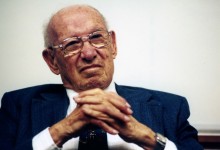
Peter Ferdinand Drucker (November 19, 1909 – November 11, 2005) was a writer, management consultant, and self-described “social ecologist.”[1] His books and scholarly and popular articles explored how humans are organized across the business, government and the nonprofit sectors of society.[2] He is one of the best-known and most widely influential thinkers and writers on the subject of management theory and practice.
Peter Drucker

Quote
Plans are only good intentions unless they immediately degenerate into hard work.
McKinsey I feel so sorry for you (rant-alert)
While giving away control is seen as a flaw in a traditional context, this is the one and only true skill that should be addressed in leaders.
Social Media is a Project Accelerator
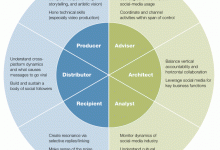
A bold prediction for 2013: social media is here to stay and it will improve the way you manage projects.
Quote
People make shoes, not money.
Unraveling Social Interaction (part 7)
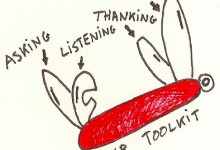
Taking care of the relationship is too simple to be true, because the tools at your disposal are as straightforward as a Swiss Armyknife.
Quote
The greatest danger in times of turbulence is not the turbulence – it is to act with yesterday’s logic.
Quote
Company cultures are like country cultures. Never try to change one. Try, instead, to work with what you’ve got.
Quote
Do not believe that it is very much of an advance to do the unnecessary three times as fast.
Quote
Culture eats strategy for breakfast.
Quote
So much of what we call management consists in making it difficult for people to work.