
Archive for the ‘Tom Peters’ Category

Horror, the Ultimate Learning

Sunday, May 2nd, 2010

Buzzard attacks are rare, but when they occur on the scalp of an organizational change practitioner it leaves a scar. Five seconds of horror and two lessons for life: Respect and Experience.

I am a fan of animal metaphors in my blog posts, be it ducks, elephants or a complete ecosystem of a pond. This post is quite similar, but it has a little twist from a Birds perspective. Indeed. In the exact sense and to the same horrifying extent as Hitchcock’s 1963 movie, where birds of all kinds suddenly begin to attack people.

As you can see from the above picture, I had my dose of Hitchcock today. I went for a morning run when all of a sudden a buzzard swooped from behind and attacked me with its talons. But I am alive and well, no stitches – just a tetanus renewal and full box of antibiotics for the coming week.

Timesaver: Sports & Primal Scream Therapy

Apparently buzzards always attack from the back. As I read through some buzzard attack incidents – I found that mine was exactly the same: a bang on the back of my head and as I looked up the buzzard was already preparing its next attack. It missed that second attack probably due to my primal screaming and gesticulating. By the third attack I managed to grab a piece of wood and noticing that, it past by and landed on a branch, finishing our encounter with some screams of victory.

Revenge or Respect?

I wouldn’t be blogging about this incident if I hadn’t procrastinated some sense out of this experience throughout the day. When a bird of prey tries to pick your brains there must be a lesson in there.

The takeaway – apart from the vaccination – for Organizational Change Practitioners is the fact that any time of the day you may be thinking of yourself as minding your own business and doing no harm, when all of a sudden horror strikes. You are puzzled and instantly your sense-making mind starts to produce a reality to match your indignation. Like me you may be advertising your innocence and receive lots of sympathy.

Fact is that I was a threat to the bird and that – from its perspective – the bird did what it had to do: it gave me hell. I was a foreign element disturbing the bird’s status quo. As long as I fail to see this, I will continue to be in the right. Indignation is the force that puts me in the right, and since the bird cannot post its opinion – not even on Twitter – that’s where this game will end: shared disgruntlement powered by one man’s indignation. Sounds familiar?

How about suspecting myself first? For instance: I now learned about the breeding season; I investigated comparable incidents; looked at the birds motives, etc.  As a result I can now invest in a hat or better even: avoid the territory this time of the year. Knowing that I cannot control the bird, ‘trying harder to be right’ will not help.

Instead, approaching the incident with respect is a better response; a responsible one. The result: I am now better equipped and  “able to respond” to the situation at hand (i.e. the real meaning of the word ‘responsible’).

You Never Know Until You Go

A second lesson I can take away from today’s adventure is the fact that you never know what will happen until you do something. As Tom Peters is often quoted: “Implementation is the last 99%”.

The point is that I could prepare my run with all of my knowledge but would never ever be investing time, money or manpower into preventing head injuries from buzzards. And still, reality hit me and proved me wrong. That is why preparation and plans are good as long as they are a conversation in the first place and NOT a document that reads between the lines “you can now stop thinking”.

Most of the times though we see people blindlesly carrying out a plan even when the circumstances are screaming for course adjustment.  Good planning may have saved a skinned knee but never would have saved my scalp today. Primal scream course correction prevented me from more than one head injury. Could I have prevented the injury altogether? No way. That part is called: Learning.

The part that is called Experience is scratched on my scalp. I take it with me wherever I go. It is the ultimate learning.

A conflict isn’t always a bad thing – Part 4

Sunday, December 14th, 2008

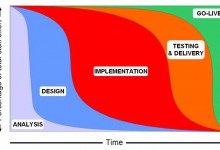
"Implementation is the last 99%" – Tom Peters

Finally – the GSD perspective (GSD = ‘Getting Stuff Done’). When we have a closer look at the workplace dynamics that are in play when projects and departments are getting work done (aka: ‘implementation’), there is a remarkable phenomenon: conflict and tension seem to be part of the job whenever we approach a milestone or a deadline.

Like a law of nature, conflict is inherent to implementation because people with different assumptions are about to deliver the exact same piece of work. As long as that piece of work is a verbal reality (i.e.: an idea, a project plan or a blueprint) consensus is abundant. So far the honeymoon phase.

The next project step is to build a tangible prototype or to launch a pilot. After that, it gets worse in terms of conflicts and clashes because gradually more people get involved in order to test the stuff, in order to be trained or just in order to allow the members of the team they are leading to free up time for participating to your project. And these people come from different backgrounds; they did not travel the same road as you did over the past months… so the next thing you know is that they start asking silly, annoying and (seemingly) irrelevant questions.

Basically, people in projects clash on two levels:
1. first, as things get tangible, people clash on the concrete level ("What does the solution look like and how will it work?"): the path from abstract to concrete is a bumpy road to the same extent as expectations, assumptions and interpretation of the project mismatch. This is exactly the bumpy road that Tuckman describes in the "forming – storming – norming – performing" model.

2. Second, as things move forward, people clash on the alpha level (i.e.: in the biological sense). The basic concern here is: "How do I contribute to this solution? / What is my role?" Here as well, expectations, assumptions and interpretations of the project hierarchy are often mismatching. Mind you: this has very little to do with the project organization chart on paper - I am talking hormones here: testosterone and estrogens to be precise.

To summarize, here is a simple example of a project setting:
- Mr. and Mrs. Smith (the project team) are about to purchase a ball (the project goal);
- They carefully and successfully planned the purchasing process (going to the store together before closing time);
- They may even be managing a budget.

So far, the project is a verbal reality and they are about to find out the mismatch on the concrete level as soon as they see one another heading for a different part of the store (the basketball department versus the softball department): "Hey, this is not what I meant!". On the alpha level, the other one may respond: "Who’s in charge here anyway?"

The point to remember here is that this conflict is not a bad thing. It is just an indication that people are delivering concrete things on that project. And the opposite is also true: beware of conflict-free projects; chances are that they score poorly on the implementation level.

My Inconvenient Truth – part 1

Sunday, May 18th, 2008

A few months ago I was a co-guest-speaker for a foundation of voluntary workers who give support to adolescents in trouble (problematic family situations, psychiatric disorders, young mothers, etc.). The topic was innovation and how they could learn from best practices in both the non-profit and the profit sector. There were less than 15 participants – each of them managing a foundation in the ‘adolescent care sector’ – and there was good interaction and sharing of ideas.

Together with the other guest speaker – the director of a foundation that is considered an innovator in that segment - we concluded that innovation is a matter of human factors and mindsets, rather than technological acumen. To summarize, there were six levers to innovation we put on the forefront:

1. Pragmatism: this is the theme that Tom Peters would translate as ‘They say plan it, I say do it‘. In each innovation and renewal exercise there is a thinking phase and a doing phase. The geniality of innovation lies in the second phase. ‘Real innovation’ so to speak is ‘a reaction to the prototype’.

2. Naivety: some would say ‘ignorance is bliss‘. My co-speaker rephrased it as ‘if it’s a good project it will get funded‘. Naivety also means putting an unconditional trust in your peers and co-workers as you are implementing the innovation. If you open the oven every five minutes as you are baking the bread, I guarantee it wil be lost.

3. People: Marcus Buckingham would summarize this one as: ’People don’t change that much. Don’t waste time trying to put in what was left out. Try to draw out what was left in. That is hard enough.‘ Innovation in that case is a process of ‘drawing out‘ rather than ‘putting in‘. Regular readers of this blog know that it’s all about involvement.

4. Approach: Adopt a structured approach of getting on the other side of your boundaries on a regular basis. My co-speaker found that simple ideas and contact moments with volunteers, parents, neighbors, etc. were very fruitful from a serendipity point of view. The quote that fits best here is: ‘Do one thing every day that scares you.’ from Eleanor Roosevelt.

5. Leadership: It is not the bold statements and Rambo-aspects of leadership that wil bring about innovation. It is rather the ‘stop doing things‘ leadership style that Peter Drucker promoted that will bring about innovation. To name but a few examples: ’stop your addiction of knowing and controlling things’ and ’stop stigmatizing mistakes’.

6. Thresholds: When it comes to expanding boundaries and doing stuff we never did before, all organizational change practitioners know that the greatest source of bullshit with which we must contend is ourselves. Asking the question ‘What would I do if I was not afraid?’ -just like Hem and Haw in the famous tale of Who Moved My Cheese, you will discover that your relationship with fear determines your ability to innovate. It is our own maturity, expressed by how well we deal with our own fear, which will determine how well we ‘allow’ innovation.

My inconvenient truth and that of many others is that the true genius resides in interaction with people and co-incidence. Getting the added value out of those moments places a different emphasis on intelligence than we were used to.

Intelligence and innovation from that perspective is not ‘the ability to know and to accumulate and analyze facts‘ but rather ‘the ability to interact, the courage not to judge and the naivety to commit before knowing how’. Duh… never seen a management guru praising those skills…

Useful Insights from Employee Burnout

Thursday, January 17th, 2008

Research suggests that the level of autonomy or job-control determines the level of stress and burnout to a larger extent than job-demand or complexity. For managers there is a lesson in there: Respect.

I was on the 5:50 pm train with Nancy. She works for the social security administration on a department I would simplify as ‘accounts receivable’. She talked to me about how puzzled she was by the high turnover in the team of datamanagers – a team that is fundamental in managing the accounts of about 6 million inhabitants (as you can guess: Flanders).

On the other had she was very surprised by the stabilty of the claims department. Not only do they have the straining job of hunting citizens to pay social security, they also need to take care of the complaints, excuses, arguments and plain threats. Because of that stress, she would have expected to witness a high turnover the latter team instead of the former.

The Insights

As an outsider who is keen on organizational behavior I immediately thought of the reseach on burnout. Two specific researches came to my mind:

1. The 1979 Karasek model (*) which is also known as the ‘job-demand-control model’. It illustrates that high job demands do not necessarily lead to burnout. The point here is not job demand but the ability to control the job at hand! In other words: are people supported by the right level of autonomy, context, framework, tools etc. in order to cope with the job demands? If yes: then the job is stimulating rather than exhausting. If no:… well … quite the opposite.

2. The 2006 research on Employee Burnout by by Lakshmi Ramarajan and Professor Sigal Barsade from Wharton suggests the same as Karasek: job control is the bottom line. In their research, Ramajaran and Barsade have elaborated this dimension a bit further. First, they found that respect (indeed: R-E-S-P-E-C-T) influences burnout above and beyond the effects of job demands. In their own words: “The impact of organizational respect on burnout is felt most strongly when job autonomy is low.” Autonomy (i.e. ‘Job Control’), the researchers note, can act as a buffer on stress - and actually decrease job burnout.

The Real Bottomline: Respect

And there is more. According to Ramajaran and Barsade, the extent to which others are treated can influence an individual’s own perceptions of respect. For example, when team members see someone else on the team being treated unfairly, they alter their own perceptions of the fairness of the team. In case you would not have a clue what Ramajaran and Barsade are referring to, have a look at this video of Tom Peters explaining the correlation between R-E-S-P-E-C-T and excellence in leadership: my gut feeling says it must be around 99,9%.

Of course, as an outsider I could be terribly wrong in my analysis but blogging about this topic was a good reminder of what really matters in the workplace. Thanks Nancy, for sparking these ideas!
______________
(*) Source: Karasek, R. (1979). Job demands, job decision latitude and mental strain: Implications for job redesign. Administrative Science Quarterly, 24, pp. 285-306.

Cracking the Code of Indifference…

Tuesday, May 29th, 2007

… and Coming to Better Grips with Resistance

For a few weeks now I am fascinated by a discussion on indifference on Tom Peters’ blog. It brought to my attention that there is more than ‘good old resistance’ to organizational change. The longer I thought about it the more I realized that the number one behavior you come across in the majority of the organizational change programs is indifference instead of blunt and open ‘in your face’ resistance. So is indifference just another form of resistance? I think not. The first is a coping behavior that foils change and the latter is an authentic reaction fueling change. In this article I will explain how this influences our approach towards organizational change.
The first distinction we need to make is the difference between the intention we have inside of us and the behavior that we demonstrate on the outside. They can be in sync or out of sync. Like the quote of Ashleigh Brilliant, "Fortunately in my work there’s always a choice: I can choose to do it willingly or unwillingly", there are four quadrants we can draw; two of which
are authentic and two that are coping behaviors:
  • Commitment: what happens when your intention is willing and your behavior follows your intentions. Let’s say this is an authentic ‘yes’;
  • Resistance: what happens when your intention is unwilling and when it is in resonance with your behavior. In his book on Flawless Consulting, Peter Block (*) lists some common types of resistance that are abundant during the lifecycle of an organizational change, they are: Need more detail, Giving a lot of detail, Not enough time, Impracticality, Confusion, Silence, Moralizing and Press for solutions. These behaviors demonstrate a ‘no’, but an authentic ‘no’.
  • The Stockholm Syndrome: The Stockholm Syndrome describes the behavior of hostages who become sympathetic to their hostage-takers. The name derives from a 1973 hostage incident in Stockholm, when several victims began to identify with their hostage-takers as a coping strategy. It is the same kind of fear of repercussions that we can find in some organizations. People lose their perspective as if they were in a hostage situation and start to act against their unwilling intent. From the outside they gladly execute, commit to the commandments that were made, so the behavior is a false ‘yes’.
  • The Otis Redding Syndrome: I borrow this one from Bob Sutton, who recalls the line from Otis Redding’s old song: Sitting By the Dock of the Bay, “Can’t do what ten people tell me to do, so I guess I’ll remain the same". Clearly, this describes people with a good intention who are somehow hindered to follow their intention. In this model I will call this a false ‘no’.

Fueling or Foiling?

By the very fact that I refer to the latter two as ’syndromes’ you can guess that they are kind of unhealthy in the context of an organization. Left aside the rhetoric of Bob Sutton on Jerks that hooks most of his readers in a pointless conversation on victims, persecutors and rescuers, what interests me most is how we can get the energy we need to drive an organizational change and,
overall, a healthy work environment.

Unfortunately, I did not come across commitment – in the narrow sense of this model – all too often in for-profit multinational environments. You will be most likely to find it in smaller enterprises and not-for profit initiatives and it drives people endlessly.

Second, I am coming to the insight that resistance is a rare behavior as well. I admire it even more than commitment because not only does it fuel people to be open about what they care about, it also goes against what is expected and generally accepted. It takes courage to figure out what is not important to you and to say no to it and vice versa.

The Otis Redding Syndrome is a depressing energy drain, regardless of whether you think people are victim to it or guilty of it. The point is that it is sustained by confusion (I tend to look at confusion as a behavior). Otis Redding’s solution was to “remain the same” because he couldn’t please 10 different people. According to Sutton, that is a rational response to a bad system.

As for the Stockholm Syndrome it suffices to quote Rita Mae Brown when she says ‘The reward for conformity was that everyone liked you except yourself’.

Both syndrome behaviors are dissonant with the intention on the inside; which demonstrates the definition of cognitive dissonance. The unhealthy part? A major cause of burn-out.

The Best Approach?

‘Mayday, mayday’: If I want to be consistent with this model in my organizational change advice, I will need to revise my approach on the syndromes with a 180° angle. Until now I have always argued that resistance is not the problem (and I stick to that part) but that real problem is indifference. I argued that nothing is worse than people who don’t care. However, as I learned from Bob Sutton, indifference has many virtues, as he believes that learning not to care and what not to care about is an essential survival skill.

As a result of this insight, here is my revised approach to resistance as well as both inauthentic ‘indifference’ syndromes:

  • Counter resistance with respect because it is an authentic expression that demonstrates that people care. Receive the communication and acknowledge receipt. Then, shut up and pay attention. This aligns with the advice of Peter Block, when he states that dealing with these behaviors primarily requires allowing, supporting, and acknowledging the complete expression of the resistance. In other words: shut up, listen and acknowledge receipt.
  • We should counter the ‘cognitive dissonant’ syndromes with respect as well – no games – because this is how people try to bridge the dissonance between their behavior and their intent under the given circumstances. Instead, what we should do as a change agent is to provide psychological safety, mostly through participation in the practicalities and the execution of the change.

Both approaches have in common that they improve the execution and the organizational alignment of your program without altering the initial strategic intent of it. And it’s really the simple things that make the difference here; you stay in charge of the why and the what, but you ask people to come up with the ‘how’, ‘when’, ‘where’ and ‘how often’.
______________________
(*) Block, P.: Flawless Consulting: A Guide to Getting Your Expertise Used, University Associates 1981.

The Handy Guide to the Gurus of Management

Sunday, March 25th, 2007

The Best Things in Life are Free, Including Management Literature!

True, there is a lot of rubbish on the internet, but for those who are good at using search-strings on Google heaven awaits. As you may have guessed I found the Handy Guide by Googling my way through the information clutter. I found it on the site of BBC World Service under the sub-section ‘Learning English’ (Huh?!).

Charles Handy – a management guru himself – guides you through the lives and works of his choice of management gurus. I could not have imagined a better introduction to management. And as the text is being used in an online course of business English you will find short sentences and clear language (in management literature this is sometimes rare).

 
"To those of you who have just tuned in, I’m Charles Handy and you’re listening to the Handy Guide to the Gurus of Management, from the BBC World Service. There will be twelve gurus in all but, as I said earlier, I am going to begin with myself and my ideas. That’s so that you can get to know me and my prejudices, my way of looking at the world, even the way I talk."
 
Here is the list of management gurus that he brings to our attention:
Twelve gurus described by a guru in plain English – if it would be a book I would be the first one to buy it. All these summaries are available in audio as well in 15 minute talks. The best introduction one can find, although as Handy asserts in his concluding remark:
 
"It is impossible to do justice to someone’s lifetime collection of ideas in fifteen minutes. All I have been able to do is to introduce to you some of the best thinkers of our time in the hope that I can persuade you to get to know them better; I trust that the twelve gurus we’ve met in this Handy Guide will help you find your own way in the world."