
Archive for the ‘René Daumal’ Category

Resistance Yourself!

Monday, June 21st, 2010

Most of us have two lives. The life we live, and the unlived life within us. Between the two stands Resistance.
Steven Pressfield

Coming to terms with the very ‘resistance’ I have been studying and writing about for the last few years: it is all about the same thing.  It is all about me, myself and I. And that’s bad news for my ego.
Chameleon Law

Earlier I have mentioned the 1944 unfinished novel Mount Analogue by René Daumal. It describes the travel of a company of eight, who set sail in the yacht Impossible to search for Mount Analogue, a solid, a geographical place that “cannot not exist.”

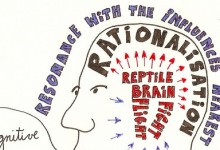
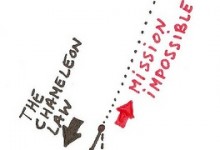
The story of Mount Analogue is about making something happen that all people around you say is impossible and ridiculous.  In this novel about the expedition to a mythical mountain that reaches from earth to heaven, Daumal mentions the chameleon law, which he describes as the inner resonance to influences nearest at hand (“la résonance aux plus proches affimations” if you happen to speak French). As the protagonist of this tale is in the vulnerable starting phase of this expedition, he discovers how he is prone to social pressure and how difficult it is to commit to something before knowing how.

Amygdala

Mount Analogue is about inner doubts and how they prevent us from seeing the other 99% of the possibilities that are at hand in each situation. With rational thinking and conventional ‘common sense’ we easily fall prey to the chameleon law. Scratch off the surface of the chameleon and you will find Fear driving its actions.

The chameleon law as it was coined in 1944 by Daumal didn’t go mainstream until Daniel Goleman – more than 50 years later – published Emotional Intelligence.

All of a sudden the reptile brain – also known as the amygdala – went mainstream. The amygdala  plays a key part in our fight-flight responses to unpleasant sights, sensations, or smells. A great part of our basic instincts such as anger and anxiety are emotions activated by the amygdala.

Lizard Brain

But it is only until recently that the functioning of this reptile part of our brain has been translated in terms of organizational change.

In his latest book Linchpin Seth Godin refers to the chameleon law as the voice in the back of our head telling us to back off, be careful, go slow, compromise. He calls it the lizard brain. It is writer’s block and every project that ever shipped late because people couldn’t stay on the same page long enough to get something out the door.

He uncovers the lizard brain as the motor of mediocrity and the main responsible for late launches, middle of the road products and procrastination. It is the force that causes you to fit in instead of standing out.

Redefining Resistance

Godin got the inspiration for the lizard brain from Steven Pressfield – who refers to it as “the resistance”. Hereby Pressfield radically redefines the term resistance by taking it from a general condition that can easily be diagnosed in other people to the identification of a force we all have to struggle with.

In his book The War of Art: Break Through the Blocks and Win Your Inner Creative Battles
, Pressfield states: “Resistance seems to come from outside of ourselves. We locate it in our spouses, jobs, bosses, kids.” But in truth, as he continues: “Resistance arises from within. It is self-generated and self-perpetuated. Resistance is the enemy within.”

The Moral for Organizational Change

Organizational change projects are mostly about creating a situation that does not yet exist. A situation, a project or any other expedition is “talked into existence”. With every word you speak, a seed is planted that can give birth to a new reality. Karl Weick refers to this as the process of Enactment to denote that certain phenomena (such as this crazy expedition, or your own project for that matter!) are created by being talked about.

Slowly but surely – if you are persistent enough – your ideas translate to words, your words translate to actions and our actions result into tangible outcomes.

The lizard-type of resistance is the biggest enemy during organizational change efforts, because you are shaping the path for a future that has no gravity in the present.

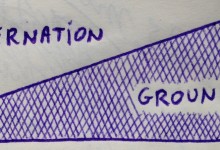
As you can see from the drawing, the classic way of managing resistance will only get you half way. The last part of the change curve is about fighting the chameleon law from taking over.

Turning Pro

You have to be crazy enough and stubborn enough to endeavor your objectives against all odds of the chameleon law.

It is the very process of setting one foot in front of another and then: keep on climbing. Steven Pressfield calls this turning pro: “The amateur believes he must first overcome his fear; then he can do his work. The professional knows that fear can never be overcome. He knows there is no such thing as a fearless warrior or a dread-free artist”

An organizational change project is a mountaineering expedition of the inner mind as much as it is about delivering a project according to a certain methodology. It is as much an organizational process (Managing resistance as we know it) as it is an inner struggle for fueling our own commitment to an expedition with an un-rational (i.e. ‘rationally ‘unreachable’) objective (Managing resistance inside yourself).

But the hardest part of the battle is inside our own heads. It’s the ability to pursue a dream.

The Chameleon Law

Sunday, March 8th, 2009

“It is not the mountain we conquer but ourselves.” -  Edmund Hillary

In the 1944 unfinished novel Mount Analogue, René Daumal describes the travel of a company of eight, who set sail in the yacht Impossible to search for Mount Analogue, a solid, a geographical place that “cannot not exist.

The protagonist of the book is convinced by a certain Father Sogol to undertake this “crazy” expedition. Father Sogol is a figure who likes to invert cause and effect (and is therefore called the inverse of the Greek “Logos” – representing ‘rationality’ and logical thinking).

“A crazy expedition”

The story of Mount Analogue is about making something happen that all people around you say is impossible and ridiculous.  In this novel about the expedition to a mythical mountain that reaches from earth to heaven, Daumal mentions the chameleon law, which he describes as the inner resonance to influences nearest at hand (“la résonance aux plus proches affimations” if you happen to speak French). As the protagonist of this tale is in the vulnerable starting phase of this expedition, he discovers how he is prone to peer pressure and how difficult it is to commit to something before knowing how.

Father Sogol had really convinced me, and while he was talking to me, I was prepared to follow him in his crazy expedition. But as I neared home, where I would again find all my old habits, I imagined my colleagues at the office, the writers I knew, and my best friends listening to an account of the conversation I had just had. I could imagine their sarcasm, their skepticism, and their pity.

I began to suspect myself of naiveté and credulity, so much so that when I tried to tell my wife about meeting Father Sogol, I caught myself using expressions like “a funny old fellow,” “an unfrocked monk,” “a slightly daffy inventor,” “a crazy idea.” After all that I was stupefied to hear her say at the end of my story: “Well, he’s right. I’m going to start packing my truck tonight. For there are not two of you. There are already three of us!
So you take this all seriously?
This is the first serious idea I’ve come across in my life.

And the force of the chameleon law is so great that I came back to the thought that Father Sogol’s enterprise was, after all, entirely reasonable.

The Tipping Point

Now what could possibly be the relevance of this chameleon law for us as organizational change managers? Mount Analogue is about inner doubts and how this chameleon law rocks us asleep and prevents us from seeing the other 99% of the possibilities that are at hand in each situation. With rational thinking and conventional ‘common sense’ we easily fall prey to the chameleon law.

However, organizational change projects are mostly about creating a situation that does not yet exist. A situation, a project or any other expedition is “talked into existence”. With every word you speak about it, a seed is planted that can give birth to a new reality. Karl Weick refers to this as the process of Enactment to denote that certain phenomena (such as this crazy expedition, or your own ambitious project for that matter!) are created by being talked about. Slowly but surely – if we are persistent enough – our ideas translate to words, our words translate to actions and our actions result into tangible outcomes.

The chameleon law is the biggest enemy during organizational change efforts, because you are shaping the path for a future that has no gravity in the present. As Arthur Schopenhauer is often quoted: ‘Every truth passes through three stages before it is recognized.
In the first it is ridiculed, in the second it is opposed, in the third it is regarded as self-evident.’

Broken Windows

This is exemplified by the broken windows theory. Consider a building with a few broken windows. If the windows are not repaired, the tendency is for vandals to break a few more windows. Scientists in the field of criminology found that disorder invites even more disorder and that a small deviation from the norm can set into motion a cascade of vandalism and criminality. Litter encourages more litter – another way of saying: resonance to the influences nearest at hand.

Malcolm Gladwell was the first to bring the broken window theory to our attention when he described it as paramount in reaching a Tipping Point (an idea which he first published in 1996 as an article in The New Yorker and which he later published in a book with the same title).  As Gladwell notes: “Why was the Transit Authority so intent on removing graffiti from every car and cracking down on the people who leaped over turnstiles without paying? Because those two trivial problems were thought to be tipping points-broken windows-that invited far more serious crimes“.

So we need to beware of all the broken windows symptoms of cynism and indifference and instantly fix every broken window. This is the intense and step-by-step work of creating a new culture.

Committing without knowing how

However, preventing the chameleon law from taking over goes a little deeper than paying attention to practical details. One has to be crazy enough and stubborn enough to endeavor your objectives against all odds. The Mount Analogue expedition reveals the insight that any expedition or organizational change project is a mountaineering expedition of the inner mind and intrinsic motivation, as much as it is about delivering a project according to a certain methodology. The tipping point is as much an external and societal process as it is an inner struggle for fueling our own commitment to an expedition with an un-rational (i.e. rationally ‘unreachable’) objective. It’s the ability to pursue a dream.

Alpinism is the art of climbing mountains by confronting the greatest dangers with the greatest prudence. Art is used here to mean the accomplishment of knowledge in action.

You cannot always stay on the summits. You have to come down again… So what’s the point? Only this: what is above knows what is below, what is below does not know what is above. While climbing, take note of all the difficulties along your path. During the descent, you will no longer see them, but you will know that they are there if you have observed carefully. There is an art to finding your way in the lower regions by the memory of what you have seen when you were higher up. When you can no longer see, you can at least still know. . .

Daumal, who was apparently one of the most gifted literary figures in twentieth-century France, died before the novel was completed, providing an extra symbolic meaning to the journey. Beware of the chameleon law as you endeavor to live your dream, instead of dreaming your life!

_______________
Related post:
Better a wrong decision than no decision (February 14th, 2007)