
Archive for the ‘Marshall Goldsmith’ Category

Exactly HOW can I be responsible for the communication?

Sunday, March 29th, 2009

Earlier this month I stated that the quality of a communication is determined by the extent to which the receiver feels understood and involved, rather than by the amount or even the quality of information. In other words: it is the relationship, rather than the content which determines the quality of a communication. One week later I continued by saying that the sender of a message has the most possibilities at hand by declaring oneself the context for all the circumstances that occur with regards to the communication ("being the board" as Ben Zander calls it) .

Destination: Relationship

Last week my friend Alex was kind enough to open my eyes to the fact that ‘being the board’ is about being the cause for something to occur, instead of being the outcome of a situation. He said: "If you feel like you’re the victim of a situation, that is because you see yourself as the effect of a situation instead of the cause. But the one thing you should know is that you can control your own reactions and initiatives; and these should be driven by a smarter objective. So have another look at what you would like to create, because you DO create the situation you are in by means of your reactions and initiatives."

So there I was, looking at my own knowing-doing gap; and Alex gave me the "X" on the map that told me "you are here": I’ve been writing about this stuff for quite some time, running workshops on that topic and yet I was stuck like a fish on a hook. Until Alex told me I can choose to be the pond instead of the fish in terms of how I act and react in a situation. Do I want to be a fish? Then I will get hooked every time the bait is thrown out. Do I choose to be the pond? Then I will be the context where both the fish and hook are welcome!

In terms of communication it comes down to this: if I want to be right, it’s the best guarantee for a conflict. On the other hand, when my destination is relationship there are a lot of ways to make others win and at the same time being the cause for this situation to occur. All it takes is a healthy dose of integrity.

Toolkit: Integrity

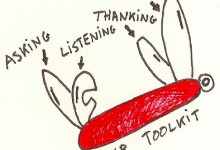
So the next question is: exactly "HOW" can I be the cause for relationship to occur?  There are 4 ways to do so and they are universal, i.e.: they are available to anyone, anytime, anywhere. They are:

1. Asking for help: The great Peter Drucker once said: "the leader of the future will be a person who knows how to ask". Asking for help opens doors with honesty and is difficult to resist. It allows your counterpart to have a stake in the solution and to ‘win’ and at the same time you are the cause for this situation to occur.

2. Listening: Attention here – listening is a two-way act, as it involves listening AND acknowledging what you have understood. You need to demonstrate that you are totally engaged. Aknowledging is the part that makes people feel understood and connected.

3. Thanking: Gratitude is a skill we can never display too often. And yet for most people it seems like they need to wait for the perfect moment … but it never comes. It is always the right time to say ‘thank you’. Gratitude is not a limited resource and an overdose is not harmful.

4. Apologizing: Marshall Goldsmith calls this ‘the magic move‘, because an apology is a recognition that mistakes have been made and it contains an intention to change for the better. But most of all, an apology is an emotional contact with the people you care about. It is a closure which lets you move forward.

Bad news for ego

You will note that these four ways have one thing in common: they require you to be humble and to position yourself ‘one down’ with regards to the person you are talking to. You can only access these tools when you let go of your need to win the competition for being right.

In his 2007 bestseller What Got You Here Won’t Get You There, Marshall Goldsmith says: "When you declare your dependence on others, they usually agree to help."  So your only way out is by putting aside ego. It is only when you decide to give up on being right that you will be able to ask for help, to acknowledge feedback, to express gratitude, or to make an apology.

Feedback takes Courage

Sunday, January 25th, 2009

"You are NOT paid for wasting your time with performance evaluation. You are here to do your bloody job!".

Apparently, those are the words of a senior program director my friend Christopher bumped into while checking out the idea of evaluating the performance of the consultants of his team. It could have been a bad-hair-day, but the odds are that this director – who unmistakably brings a great deal of assets to the company – turned down an opportunity to discover the liabilities that result from his temperament.
A window of growth opportunities

If we can stop, listen and think about how others see us, we have a great opportunity. We can compare the "assets" we want to be with the assets we present to the world, and then we can work to close the liabilities between our professed "self" and the actual "self".

The Johari Window is a good representation to underscore the point I am trying to make. It’s a four-pane grid that divides self-awareness into what is known and unknown about us to other people and what is known and unknown about us to ourselves.

The most valuable feedback, in this four-part diagram, is the stuff others know about us that we don’t know about ourselves. The interesting part is that revealing these blind spots often produces tremendous personal growth. Here are some extra guidlines for analyzing this window:

  • Feedback: this is the extent to which others are wiling to share with you and to be open.  It is also the extent to which you attempt to perceive the verbal and non-verbal information of others.
  • Disclosure: this is the extent to which you are willing to share with others information about yourself.
  • The closer your self-perception is to the perception of others about you, the larger the public area. Maturity, dignity, integrity and empathy are the tools to widen the public area.
  • Your window varies from setting to setting (home, work, individually, in groups,…)
  • Those who would benefit most from feedback are often those resisting it with furious anger.

Note: Charles Handy calls this concept the Johari House with four rooms. Room 1 is the part of ourselves that we see and others see. Room 2 is the aspect that others see but we are not aware of. Room 3 is the most mysterious room in that the unconscious or subconscious bit of us is seen by neither ourselves nor others. Room 4 is our private space, which we know but keep from others.

Let it go!

OK – now back to Christopher and his boss.  There is only one advice that I can give and it’s the same that Marshall Goldsmith gave when he was asked "How do you deal with people who have no desire to change?" His reply:

"I don’t.  Have you ever tried to change the behavior of an adult who had absolutely no interest in changing? How much luck did you have with your attempts at this ‘religious conversion’? Have you ever tried to change the behavior of a spouse, partner or parent who had no interest in changing? How did that work out for you? My guess is that you have tried and have been consistently unsuccessful. You may have even alienated the person you were trying to enlighten. If they do not care, do not waste your time."

Not much I can add to that, frankly…

________________
Sources: Luft, J. and Ingham, H. (1955) "The Johari window, a graphic model of interpersonal awareness", Proceedings of the western training laboratory in group development. Los Angeles: UCLA

Trust is the Currency of Change

Saturday, October 11th, 2008

In any organizational change project you will be taking people through some difficult phases and you will have to heavily rely on people to make a shift from the current reality to a future state. In such a situation, mutual trust and good relationships are sometimes the only things to hold on to. But how do you manage that?

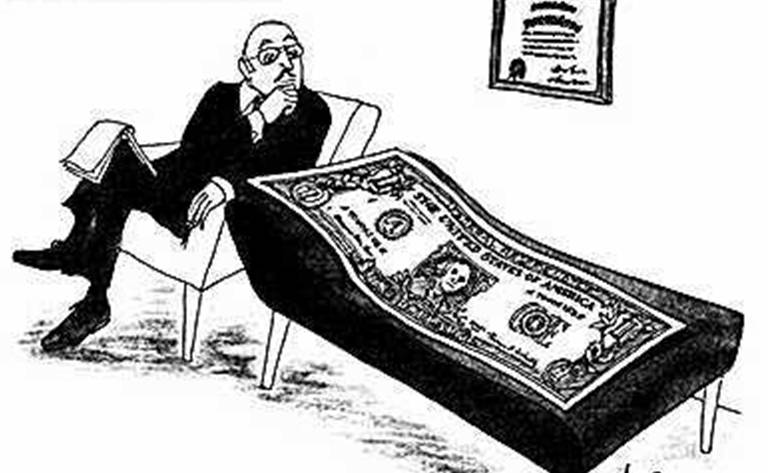
I’d like to refer to the metaphor of the emotional bank account that is often used by Stephen Covey. It’s like a financial bank account into which you can make deposits and take withdrawals. The currency of this bank account is trust, so its statements tell us something about the relationship you have with your friends, family, associates, customers, etc.

The most important of all deposits into the emotional bank account of trust is empathy. Covey defines empathy as: listening to another person within his or her frame of reference. Empathy tells you what the important deposits are to that person.  The key is to always develop a relationship that produces win-win agreements, so the feeling is that everyone wins. But to do that, you have to deeply listen to other people to find out what the win is for them.


There are two other important ways to make deposits on that emotional bank account: apologizing and thanking (yes – it’s as simple as that). First, as Marshall Goldsmith notes, humbly admitting mistakes and apologizing is a critical component of leadership, both in our personal and professional lives. Admission of mistakes and careful distillation of lessons learned, in fact, can strengthen the bond between you and the people around you. The same goes for expressing gratitude (that is: beyond what is ’socially’ expected).

But if you are in a state of denial and don’t have the humility to admit that you’ve made a mistake, then you’ve just taken another withdrawal and people will come to not trust your apologies and your asking for forgiveness. So trusting the people around you, showing it to them, and trusting yourself to do so is an important competence for managing organizational change.

Leading@Google: Marshall Goldsmith

Sunday, April 27th, 2008

This 65 min video is worth watching till the end. You’ll see Marshall Goldsmith in action on an event called Leading@Google.

The bottom line of his talk and exercises is: you can’t change the past, so focus on the future and ask: what can I do to be a better manager / parent / son / daughter / co-worker …? It’s called feedFORWARD (future oriented) as a replacement for feedBACK (past oriented).

There are two previous articles on this blog on Marshal Goldsmith:

- 2008 … Highway To Hell (January 5th, 2008)

- One, Two, Three, Seven?! (April 15th, 2008)

One, Two, Three, Seven?!

Tuesday, April 15th, 2008

Every time I introduce something new into my team, my project or the organization I am working for I am reminded of how well I can count. Let me explain: it’s all about buy-in.

The below text is quoted from Marshall Goldsmith’s book What Got You Here Won’t Get You There. It describes exactly the false illusions, desperations, frustrations and plain trouble I often get myself into.

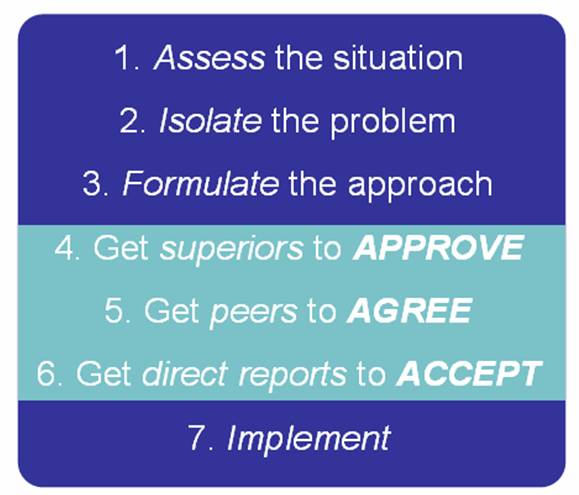
Has the following ever happened to you? your boss gives you a major assignment to find out what’s going on at a trouble spot within your company. You do what any well-trained MBA would do. You study the situation, identify the problem, report the findings and recommendations to the boss, outline a new approach, and turn it over to the appropriate people to implement the strategy.

A month goes by. Nothing happens. Another month. Still no progress. Six months later, the trouble spot remains unchanged. What did you do wrong? It’s simple: you committed "one, two, three, seven."

You failed to appreciate that every successful project goes through [the] seven phases [of the schedule below]:one-two-three-seven.jpg

Unfortunately, a lot of people don’t pay close attention to the phases four, five and six – the vital period when you approach your co-workers to secure the all-important political buy-in to your plans. [...]

These three phases are the sine qua non for getting things done. You cannot skip or skim over them. You have to give them as much, if not more, attention as you do in phase one, two, three, and seven. If you don’t, you may as well be working alone in a locked room where no one sees you, hears you, or knows you exist. That’s the guaranteed result of committing one, two, three, seven.

2008 … Highway To Hell

Saturday, January 5th, 2008

This time of the year is by far the best moment to over promise on good intentions. As the saying goes: ‘The road to hell is paved with good intentions’. Cutting back on promises and refraining from making a new year’s resolution would be the safest thing to do right now. However, I happen to be in the middle of a good book called ‘What Got You Here Won’t Get You There‘. The author is Marshall Goldsmith, a famous executive coach. I like this book so much that I decided to blog about it even before I finished it. And while I’m at it, I attach my new year’s resolution to it.

Let me explain.

whatgotyouhere.jpg

Unlike any other book in the field of coaching, this one is pretty down to earth and it does not tell you what you should start doing. Instead, it tells you what to stop doing. The subtitle of the book says it all: ‘20 workplace habits you need to break’. The practical, real world advice for conquering these bad habits is immensely useful. Here’s his list of bad habits:

1. Winning too much: The need to win at all cost in all situations – when it matters, when it doesn’t, and when it’s totally beside the point.
2. Adding too much value: The overwhelming desire to add our two cents to every discussion.
3. Passing judgment: The need to rate others and impose our standards on them.
4. Making destructive comments: The needless sarcasm and cutting remarks that we think make us sound sharp and witty.
5. Starting with ‘no’, ‘But’, ‘However’: The overuse of these negative qualifiers which secretly say to everyone, “I’m right. You’re wrong”.
6. Telling the world how smart we are: The need to show people we’re smarter than they think we are
7. Speaking when angry: Using emotional volatility as a management tool.
8. Negativity, or ”Let me explain why that won’t work”: The need to share our negative thoughts even when we were not asked.
9. Withholding Information: The refusal to share information in order to maintain an advantage over others
10. Failing to give proper recognition: The inability to praise and reward.
11. Claiming credit we don’t deserve: The most annoying way to overestimate our contribution to any success.
12. Making excuses: The need to reposition our annoying behavior as a permanent fixture so people excuse us for it.
13. Clinging to the past: The need to deflect blame away from ourselves and onto events and people from our past; a subset of blaming everyone else.
14. Playing favorites: Failing to see that we are treating someone unfairly.
15. Refusing to express regret: The inability to take responsibility for our actions, admit we’re wrong, or recognize how our actions affect others
16. Not listening: The most passive-aggressive form of disrespect for colleagues.
17. Failing to express gratitude: The most basic form of bad manners.
18. Punishing the messenger: The misguided need to attack the innocent who are usually only trying to help us.
19. Passing the buck: The need to blame everyone but ourselves.
20. An excessive need to be ‘me’: exalting our faults as virtues simply because they’re who we are.

The remainder of the book is very down-to-earth. Goldsmith warns against self-diagnosis, and so he does not dive into a sea of expensive management mumbo jumbo or intelligent psychobabble. Instead, he explains the benefits of simple things that all of us are capable of, such as: feedback, apologizing, listening and thanking. The kind of things you could explain to your grandmother, or even to the contrary: grandmother’s wisdom.