

Archive for the ‘Joseph Chilton Pearce’ Category

Houston we have a SMART problem

Monday, February 8th, 2010

I always associated SMART goals with positive things, such as sound corporate governance. Never in my life I would have thought that SMART would be threat to the people I work with. But things have changed and they continue to change.

When my team has to reach a certain goal, I chunk that goal into manageable parts and plans. Next, individuals commit to the plan. Eventually – if I want them to perform well against the plan – I assign them SMART goals.

SMART is one of those management acronyms that are taken for granted by everyone. It stands for:
S   – Specific, meaning: unambiguous, clear goals
M   – Measurable, meaning: ’if you can’t measure it, you can’t manage it’
A   – Attainable, meaning: a little stretch is OK
R   – Relevant, meaning: ’important to me’
T   – Traceable by setting a journey of interim goals

Table Soccer

That is what managers and consultants learn at business schools and it is what I have been proclaiming ever since graduating. No need to shoot holes in a concept that works, is there? Everyone understands it, shepherds love it and sheep flock eagerly on SMART meadows.

Hmmm… and that’s exactly where the problem is: rather than fueling or accelerating their performance, SMART goals are numbing very bit of initiative and creativity out of people. Rather than empowering people, with SMART goals I am putting a fence around them. I’m domesticating them with function descriptions and herding them within the fences of the status quo. As you can guess: that fence an illusion of security that makes people stop thinking.

A few weeks ago Jef Staes told me that it is better to start looking at SMART goals as the worst symptom of atrophy. Once you consistently need SMART goals for your organization to perform this means that your people have lost all of their self-propelling capacity. People have become sheep and the organization has lost all of its agility. You are playing table soccer with your people.

Houston

Why are SMART top-down controlled organizations with diligent employees in trouble? They’ve worked splendid in an environment where the amount of information was fixed. The manager receives the information, interprets and processes it and then hands out the instructions. In fact, this has been the secret of growth in our economy over the past decades.

But now a shift is happening: the amount of information is overwhelming and most people, teams and companies are paralyzed by the flood of information. Information has become the new element. We are overwhelmed by something we can’t get enough of. The result for SMART corporate decision-making is painstaking: as a central commander you need to process even more information faster. No matter how hard you try, you will always be too late in this new information-driven economy.

Go Dumb or stay Numb?

If you are a leader, the key to staying on top is to stop trying to stay on top. That’s right, the advice for decision makers is to get dumber by empowering their people. That way they stop being the single information processing bottleneck. By the way, isn’t it a coincidence that the bottleneck is always at the top of the bottle?

Getting dumber will reduce the bottleneck in two ways:

1. Distributing the intelligence across their organization; turning the sheep into passionate knowledge hunters. And it’s still Ok to stay on top of decision-making. But continuing to be the single information-processing hub is paralyzing your organization.

2. Redefining intelligence. In reality intelligence is the social skill to work together in a network of experts. Joseph Chilton Pearce defines intelligence as the ability to interact. Knowledge is a social thing. Take the people away and you end up on ground zero.

The New SMART

In the old days looking forward was a good way to plan ahead. There was no ambiguous fog of information. Now the challenge is to look through the information clutter, visualizing a goal that is not yet visible. Some call it intuition, others call it gut-feeling. I call it the single most needed competence of today’s leaders: the skill to get out of their minds and into their senses.

For employees the transformation from a sheep to knowledge hunters will come as an electro-shock. After all, empowerment means taking responsibility above and beyond any fence that has been set up by them or their boss.

There are no fences. And soccer is no longer a table game.

Parenting as a Management Skill … Huh? (part 3)

Saturday, February 21st, 2009

Two weeks ago I argued that parenting is an excellent leadership crash course because we learn the hard way that it is important to trust oneself, to find an emotional balance and to take care of oneself. Last week I added that understanding and accepting the development eb and flow – rather than trying to control it – is the first step towards mastery in terms of parenting and leadership. 

Building further on the insights of child development, there is another fundamental leadership characteristic that one will never learn at Harvard, but only in the day-to-day family-life: it is the importance of setting boundaries. But first you need to know more about the concept of "matrix".
Matrix

Joseph Chilton Pearce introduced the concept of matrix. According to him, our lifelong development is a series of matrices through which we move. Life begins with three critical matrix periods: the nine months in the womb-matrix, the next nine months in the “in-mother’s-arms”-matrix; and the ninth to eighteenth month “toddler period.” The quality, character, and nature of the first two matrices are determined by the mother, and the third by family and cultural influences.

A matrix is a safe place that provides the energy and the possibilities to discover the next matrix, and if the growing child is provided a corresponding matrix at each stage of development, it will develop, learn, grow and expand. In the safe-space of a true matrix a child can use all its life energy for the subjects at hand, easily absorbing and learning that which is appropriate to his or her age. But if there is no assurance of safety, the child must use a good portion of its energy in defense mechanisms, which divides the mind, splits attention. So first and foremost, parenting aims at providing children with a safe space where they know they belong and are welcomed, wanted, and safe—the ideal learning situation.

The concept of matrix is based on the insights of Jean Piaget – who is generally regarded as the father of child-psychology. Piaget was the first to discover that during each new stage of development, the child’s brain-mind is prepared for the new potentials appropriate to that stage of growth. If appropriate models for those potentials are given in a safe space, learning is automatic, spontaneous and natural.

Below is a very short video showing Jean Piaget as he explains the importance of development in education systems, i.e.: not to teach people what we already know, but rather to enable people to learn and discover new things.

Now isn’t that the main responsibility of a leader; providing a safe place for their team so they can use all their energy for the tasks at hand and the possibilities for absorbing and learning that which is appropriate to the goals of the team?  In my opinion, there is no better school for leaders to learn about building a matrix for their team, than being involved in the life unfolding at home.

Boundaries

OK – now how do we build a matrix in practice for our family and our team? This is the challenge of setting responsible boundaries. Children need firm and just boundaries. Within those boundaries they need the caring love and attention from us as their parents. This is what allows them to develop self-worth, confidence and self-trust. A child raised without reliable boundaries is a child who will grow up confused, unsure of themselves and their behavior, and often acting out negatively as a desperate attempt to have boundaries set upon them.

Setting boundaries is a major test of our maturity level, because it implies setting boundaries to our emotions. As I stated last week, knowing where we stop and someone else starts is the first step towards a healthy emotional relationship: using affection and emotion as a form of punishment or reward in order to control the behavior of our children or team members causes problems in the long run.

Testing and growing

In growing, children seek to and need to define their limits: the limits of their environment, the definitions of who they are and what they are doing, the limits of their peers and adults. That often shows up as testing and disobedience. That is when we need to reaffirm the boundaries.  Again, the same goes for leadership in an organizational setting: your peers and team members will be testing you, the other team members, the goals you are setting, etc… in order to define their limits. 

It’s natural and we should not take it personal. In fact, good parents and good leaders take this testing behavior as an opportunity to build matrix.  We do this by engaging in a conversation in which we reconfirm boundaries, safety and possibilities. The tricky thing here is that we need to be aware that boundaries change over time, as circumstances evolve and people evolve in their behavior with respect to the limits we impose. Also, in our response to unacceptable behavior, we should clarify that it is the behavior we found unacceptable, not the child or the person we are reprimanding.

In the business school of parenting there is no escape: we learn the hard way that whenever we set a boundary, it will be tested – that’s just life with kids. In no time, our kids can make us aware of how wishy-washy or unclear our boundaries may be.

In their book The Essence of Parenting, Anne Johnson and Vic Goodman argue: "When we feel threatened and resort to hitting and screaming when the kids test us, or if we feel used and give in when our kids test us, it is time we develop healthy boundaries for ourselves."
And they continue: "Having healthy boundaries is not something we do; it’s a way of life. It’s about taking responsibility for our own well-being and safety.  It’s knowing that no one else is to blame for our feelings. If we’re frustrated or irritated, angry, sad, lonely, or hurt, it’s up to us to recognize what we need to move through and beyond those feelings: a change of heart, more rest, honest communication, asking someone to change his or her behavior, or perhaps just acknowledging the feeling and letting it be on its way"

So once again: we choose our responses to the world and taking care of ourselves is a primary condition for our leadership development and parenting development.
________________

Recommended reading:
-
The essence of parenting, by Anne Johnson and Vic Goodman

It’s About Involvement, Stupid!

Friday, June 1st, 2007

Three Views on Learning that Lead to One and the Same Conclusion

In large scale organizational change programs I often meet managers who are puzzled by the fact that people don’t learn the seemingly simple things that they are trying to distribute. As they say: "we are spoon feeding the people over here, and still they don’t get it". In this article I present three different angles that will clarify why their stakeholders "don’t’ get it". The answer is too simple to be true, maybe that’s the reason it’s so difficult for these program managers to "get it" in their turn.
#1: Ice-Breaker Evidence

In my talks on Organizational Change Management I often use the following ice-breaker questions:

  • If you were to write down the learning breakthroughs in your own life, what would they be?
  • If you were to map them on a scale of « in isolation – through interaction », where would you put them?

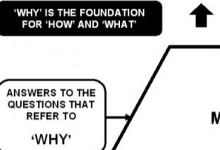
The participants actually write their learning breakthrough down on a post-it note and paste it on the pyramid. the result is always the same: the bottom of the pyramid full of post its and the top of the pyramid is always still visible at the end of the exercise.

The Learning Pyramid illustrates how much of each level of learning we remember later on. The percentages are illustrative but the trend gets confirmed each time I run this exercise: we remember 10% of what we read, 20% of what we hear, 30% of what we see and 80% of what we do. The pyramid illustrates what is meant by the saying: ‘what I hear I forget, what I see I remember, what I do I understand’.

#2: Knowledge Management Guru Wisdom

This learning pyramid also illustrates the point of John Seely Brown when he says that it is very easy for us to think that all knowledge is in the head, but we often ignore how much of our knowledge exists in action, participation with the world, participation with the problem and participation with other people, i.e., practices. A lot of the knowing comes into being through the practices of the people and the environment you’re working in.

At the top of the pyramid you will find all the information contained in instructions, procedures and manuals. This is the knowledge transfer, which garners the most tangible investments. But the bottom part of the pyramid is much more important: the knowledge as it lives within the organization. This knowledge cannot be classified in an orderly manner; rather it’s a bricolage (*) of all the formal knowledge featuring real issues, possible solutions, actions, war stories and your colleagues’ experience.

A manual or a procedure will not help you figure out whether a problem is important, or whether a solution is elegant, or whether it is even a solution. According to John Seely Brown, real knowledge is not taught, it is experienced in the form of unwritten stories and conversation. If you’re not present when the experience is created, you will not create knowledge. A perfect educational project, which is documented with the best manuals and e-learning is still not a guarantee for successful organizational change.

John Seely Brown’s second conclusion is that there is no such thing as an expert. It is wrong to express intelligence in terms of IQ because in reality intelligence is the social skill to work together in a network of experts. Joseph Chilton Pearce defines intelligence as the ability to interact. Now that’s something different!

#3: Three Ingredients of Basic HR Work

Every organizational change always has the same three ingredients : Motivation (the emotional stuff below the surface), Knowledge and Skills. These determine the domains of action for making the change happen. They are the biggest needs during every cycle of change.

  • Questions and reactions, which fall into the ‘Knowledge’ category, often indicate a need for vision, a business case or an overview. These refer to the ‘what’ of the change.
  • The ‘Skills’ category indicates a need for concrete and explicit knowledge, tools and working instructions. In other words: people want to know ‘how’ they will make the change happen.
  • In addition there is also an entire range of reactions that fall into the ‘Motivation’ category (the underlying reason that drives the change: the ‘why’). These reactions reflect people’s need for involvement and inspiration. The ingredient ‘Motivation’ determines whether people undergo the change or are part of it.

What Goes Around…

An often made mistake in organizational change projects consists of postponing all contacts with the target group until the very last minute. In an earlier post I called this ‘Project Cocooning‘. Too much influence from the target group often has a delaying and disturbing impact. ‘Now we really need to provide information’, is the usual statement. Your team isolates itself from the rest of the company and the communications department fires unidirectional communication (Knowledge) at the target group.

As a result, people feel as if a concept is being forced upon them and they aren’t really given the time to fully comprehend it. The knowledge provided during training is so theoretical that it has nothing in common with practice. Many of the people wonder why they have to spend all that time in training and are annoyed because their day-to-day work is just laying around. They have received all the explicit knowledge that is – rationally speaking – necessary to face the change. They have had the Know-whats pushed down their throats. But the project grinds to a halt in the production phase because people have not been given the time to participate and build up Know-how.

… Comes Around

As a law of nature, you will be confronted with a performance drop anyhow. Postponing participation to the very last minute will only make it worse. Even before the change really has started, you are stuck in a negative, downward spiral because most target groups are not being motivated to take the project in hand. When reactions indicate that there is a need for involvement, an information session or training will have the wrong effect.

It’s important to know where the needs lie at what precise moment. The best way to find out is to involve the target group in the project in a timely manner. A change is always a discomfort, and discomforts are easier to deal with when you participate in making it happen. The inevitable truth is that people will need to build the Know-how anyway in order for the project to work, so it is better to do that during project preparation than to pay for it in terms of a sputtering go-live.

People should be given the opportunity to be part of the creative process that is expected from them. That is why it’s necessary to effectively involve them before, during and after the change. Involve them – too simple to be true – and apparently too hard to commit to.

________________
(*) When using the word ‘bricolage’ we refer to an observation of anthropologist Claude Lévi-Strauss. He established that people don’t use an algorithmic and logic approach in their thought process but that our mind works according to the principle of ‘pick and mix’. A ‘bricoleur’ uses concrete, used materials to create something new.