
Archive for the ‘Jerome Bruner’ Category

Return-on-Training? Wrong Question!

Sunday, January 18th, 2009

Last week the manager of a plant involved in a major organizational change project claimed that the return-on-training of his classroom training courses was disappointingly low. Over the past weeks they have been switching over to SAP, by far the most popular platform in the segment of so-called ERP (Enterprise Resource Planning) software.

We have been preparing the users of his plant by means of extensive classroom trainings, both on process knowledge and systems skills. From his gut feeling he told me that his people demonstrated at best 10 to 15 percent return (i.e.: what they effectively remember and use in their jobs).

Training is the smallest part of Learning

I will not argue about the percentages. The point is that I obviously did not create the right expectations: he should be looking for the return-on-learning instead of the return-on-training! On this same blog I already announced the end of teaching and I also proclaimed that teaching is placebo. I even painted a picture about it in order to demonstrate what this means for SAP implementations specifically.

In retrospect the 10 to 15 percent reported by the plant manager is fairly high compared to what I always have been saying: 99% of what ‘Learning’ really is occurs outside of the classroom. The bottom-line is that training alone is not enough in order to make an organizational change happen. Increasing the quality of your training sessions will not leverage the return-on-training to the same extent. At the very best it is a starting point. From there on you will need to coach your way to the future state. The drawing below is taken from John Seely Brown (again!) and clearly depicts how learning really occurs

Now back to the return-on-training question. What could be the best way to increase that return? The answer is simple: this return can only increase if workplace learning has already occurred BEFORE the training session (in action, action through participation, participation with the world, participation with the problem and participation with other people, i.e., practices). Involvement, participation and ownership are key

The concept of Time-to-task is another way to look at it. Normally we use that term to describe that the training should occur as closely as possible to the task at hand. The only way return-on-training can increase is when time-to-task is negative. In plain English this means: people will get more out of a classroom training when they have been frustrated by real-life problems form the task at hand; they will posses an enormous learning pull and they will ask for and absorb every detail that is needed for the job at hand.

Here is a quote from David Maister to support that view:
"A good test for the timing of training would be as follows. If the training was entirely optional and elective, and only available in a remote village accessible only by a mule, but people still came to the training because they were saying to themselves, “I have got to learn this – it’s going to be critical for my future,” then, and ONLY then, you will know you have timed your training well. Anything less than that, and you are doing the training too soon."

Rethinking Knowledge Management

Participation, involvement and enculturation (i.e.: "belonging to") lies at the heart of learning. It also lies at the heart of knowing. Knowing has as much to do with picking up the genres of that particular sub-profession as it does with its conceptual framework. For example, how do you recognize whether a problem is an important problem, or a solution an elegant solution, or even what constitutes a solution in the first place?

Jerome Bruner made a brilliant observation some time ago when he said that we can teach people about a subject matter, for example, physics. That is, we can teach them the concepts, conceptual frameworks and facts of physics – the explicit knowledge of physics. But that does not make the student a physicist. To be a physicist he must also learn the practices of this profession. As he continues:
"We teach a subject not to produce little living libraries on that subject, but rather to get a student to think mathematically for himself, to consider matters as an historian does, to take part in the process of knowledge-getting."

So here we are. Now what? All the evidence tells us that learning is a social thing. It exists in action, participation with the world, participation with the problem and participation with other people, i.e., practices. A lot of the knowledge comes into being through the practices of the people and the environment you’re working in. The return-on-learning question reveals the challenge we face today for rethinking knowledge management:

1. shift our mindset from "pushing knowledge to people" (authority based and explicit) to "supporting people to participate in their productive inquiry" (situational based and on-the-fly)

2. Shift from tools to increase the individual knowledge stock to tools which support relationships and interaction. 

3. Shift rigid structures from managing an academy (where knowledge gathers dust) to facilitating an ecology of different communities-of-practice (where knowledge lives and evolves).

4. Do everything we possibly can in order to introduce Web 2.0 thinking in the boardroom. Think: collaboration and moments of truth instead of teaching!

Talking about organizational change management… there is work to do!

Play – Like Children Play

Sunday, November 16th, 2008

"I began to think of children not as immature adults, but of adults as atrophied children. But when I said this to educationalists, they became angry.” – Keith Johnstone

This week I would like to highlight the importance of creativity in the setting of an organizational change program. Regardless of the change you are dealing with, when you are in the thick of implementation you will soon find out that experience, knowledge and skills alone will not get the job done. Organizational changes tend to be messy and complex, so you will always need a fair amount of out-of-the-box thinking as you are crafting a solution.

One of TED’s newest talks online is by Tim Brown the CEO of Ideo. In this talk he explains the role of play, playfulness, and creativity and why they matter in our professional or academic lives. You may be a designer of consumer goods, or a medical doctor, or a researcher, or a teacher — every situation is different. But listen to what Tim Brown says and ask yourself how the idea of play might be introduced into your organization in a way that would benefit users, workers, patients, and students, not only in terms of productivity but also in terms of simply having people feel they contribute to something meaningful.

Brown starts by sharing a striking observation: ‘friendship is a shortcut to play’. It creates the trust and a sense of psychological security you need in order to take risks and to innovate. It helps to get to better creative solutions – which in the end helps us to do our jobs better.

Second, he demonstrates that when we encounter a new situation as adults – we have a tendency to categorize it just as quickly as we can. This is a survival reflex that helps us reduce the uncertainty around us (psychologists refer to this mechanism as ‘cognitive dissonance’ or ‘over justification’). This effective categorizing mechanism helps us to cope with the complexity of reality. However, at the same time, we lose every capacity to perceive events, situations and things around us without judgment – like children do. The absence of a categorizing reflex is exactly what enables kids to be more engaged with open possibilities. As adults the majority of the possibilities at our disposal are invisible – just because of this categorizing trait. As Brown describes in the video above: "parents of young kids all have their stories of how on Christmas morning our children end up playing with the boxes far more than they end up playing with the toys that ere inside them".

The bottom line is that we need to be aware of adult behaviors that are getting in the way of ideas. We need to play more often because learning is a by-product of play. For example, fearing judgment from our peers — inhibits us and often prevents us from taking chances or sharing our ideas with others. As adults we become overly sensitive to the opinion of others, we lose a bit of our freedom. 

Related articles:

Miffy

Sunday, March 2nd, 2008

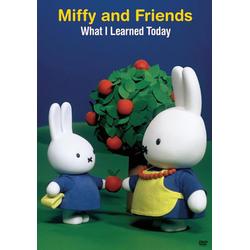
There is a 5 minute DVD of my daughters titled ‘Miffy and the shadow’ (Miffy is a little rabbit) that I often show before I start the Change Management Cooking Class workshop. At first the participants to the training are surprised, so I get their attention.

Miffy, the cute little bunny

Miffy and FriendsThe video is about how Miffy learns about the shadow in the classroom. Through the instructions of the teacher she becomes aware of light and shadow in her environment. Later we see her walking home while the sun sets and she notices her own shadow. At the dinner table she even tells her parents about what she learned.

However, at night she is very frightened by the moonlight shadow and she needs the support of her parents to calm her down. Her parents help her to make sense of it all and to link it to the concept that she learned about in class.

That’s quite a big step for Miffy, because although she was taught the concept of ’shadow’ in the classroom and although she demonstrated that she understood it to her parents at the dinner table, she had been unable to ‘use’ her knowledge in practice. She needed a gentle nudge to do that.

In case you would wonder: I do lecture in business schools and to MBA students and I use this DVD a lot! While I am switching off the DVD most of them still have that "what the fuck?" look on their faces and that is when I tell them that this is a good example of what Viginia Satir refers to as ‘foreign element’. However, there are two other insights that occur from this DVD that are fundamental to organizational change management. They are: how people develop and learn, and the importance of psychological safety.

How people learn

Miffy reveals about 90% of the major insights of development psychologists Jean Piaget and Jerome Bruner. Both of them have produced ground breaking insights on how people learn. Their main point is that knowing is a process rather than a product. In the words of Bruner(*): "We teach a subject not to produce little living libraries on that subject, but rather to get a student to think mathematically for himself, to consider matters as an historian does, to take part in the process of knowledge-getting."

Piaget, on the other hand, talks of a process of adapting. This is a constant give-and-take between modifying reality in order to fit into our minds (assimilation) and modifying our minds so the new reality can fit in (accommodation). The change-pain that results from this process is how I make a living.

In terms of Miffy’s shadow this means that the end of the ’shadow-class’ is where the process of learning begins. When the teaching stops, Miffy still needs to ‘learn’ 99% of the subject. This is fundamental for those who think that training alone is enough in order to make an organizational change happen. At the very best it is a starting point; From there on you will need to coach your way to the future state!

We are all afraid

And that is where the second insight is necessary: the psychological safety that is needed so badly in times of change. In order for this process of learning to happen, we need to make sure that the environment outside of the classroom is not one that stigmatizes mistakes.

As a starting point in times of change I think it is fair to say that we are all afraid. However, as a change agent, it is your own maturity, expressed by how well you deal with your own fear, which determines to what extent you will allow the process of learning to take place.

Pretty fundamental insights from a DVD for 4-year olds, don’t you think?

___________________
Bruner, J. S. (1966) Toward a Theory of Instruction, Cambridge, Mass.: Belkapp Press.