
Archive for the ‘Jean Piaget’ Category

Parenting as a Management Skill … Huh? (part 3)

Saturday, February 21st, 2009

Two weeks ago I argued that parenting is an excellent leadership crash course because we learn the hard way that it is important to trust oneself, to find an emotional balance and to take care of oneself. Last week I added that understanding and accepting the development eb and flow – rather than trying to control it – is the first step towards mastery in terms of parenting and leadership. 

Building further on the insights of child development, there is another fundamental leadership characteristic that one will never learn at Harvard, but only in the day-to-day family-life: it is the importance of setting boundaries. But first you need to know more about the concept of "matrix".

Matrix

Joseph Chilton Pearce introduced the concept of matrix. According to him, our lifelong development is a series of matrices through which we move. Life begins with three critical matrix periods: the nine months in the womb-matrix, the next nine months in the “in-mother’s-arms”-matrix; and the ninth to eighteenth month “toddler period.” The quality, character, and nature of the first two matrices are determined by the mother, and the third by family and cultural influences.

A matrix is a safe place that provides the energy and the possibilities to discover the next matrix, and if the growing child is provided a corresponding matrix at each stage of development, it will develop, learn, grow and expand. In the safe-space of a true matrix a child can use all its life energy for the subjects at hand, easily absorbing and learning that which is appropriate to his or her age. But if there is no assurance of safety, the child must use a good portion of its energy in defense mechanisms, which divides the mind, splits attention. So first and foremost, parenting aims at providing children with a safe space where they know they belong and are welcomed, wanted, and safe—the ideal learning situation.

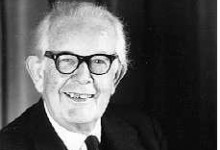
The concept of matrix is based on the insights of Jean Piaget – who is generally regarded as the father of child-psychology. Piaget was the first to discover that during each new stage of development, the child’s brain-mind is prepared for the new potentials appropriate to that stage of growth. If appropriate models for those potentials are given in a safe space, learning is automatic, spontaneous and natural.

Below is a very short video showing Jean Piaget as he explains the importance of development in education systems, i.e.: not to teach people what we already know, but rather to enable people to learn and discover new things.

Now isn’t that the main responsibility of a leader; providing a safe place for their team so they can use all their energy for the tasks at hand and the possibilities for absorbing and learning that which is appropriate to the goals of the team?  In my opinion, there is no better school for leaders to learn about building a matrix for their team, than being involved in the life unfolding at home.

Boundaries

OK – now how do we build a matrix in practice for our family and our team? This is the challenge of setting responsible boundaries. Children need firm and just boundaries. Within those boundaries they need the caring love and attention from us as their parents. This is what allows them to develop self-worth, confidence and self-trust. A child raised without reliable boundaries is a child who will grow up confused, unsure of themselves and their behavior, and often acting out negatively as a desperate attempt to have boundaries set upon them.

Setting boundaries is a major test of our maturity level, because it implies setting boundaries to our emotions. As I stated last week, knowing where we stop and someone else starts is the first step towards a healthy emotional relationship: using affection and emotion as a form of punishment or reward in order to control the behavior of our children or team members causes problems in the long run.

Testing and growing

In growing, children seek to and need to define their limits: the limits of their environment, the definitions of who they are and what they are doing, the limits of their peers and adults. That often shows up as testing and disobedience. That is when we need to reaffirm the boundaries.  Again, the same goes for leadership in an organizational setting: your peers and team members will be testing you, the other team members, the goals you are setting, etc… in order to define their limits. 

It’s natural and we should not take it personal. In fact, good parents and good leaders take this testing behavior as an opportunity to build matrix.  We do this by engaging in a conversation in which we reconfirm boundaries, safety and possibilities. The tricky thing here is that we need to be aware that boundaries change over time, as circumstances evolve and people evolve in their behavior with respect to the limits we impose. Also, in our response to unacceptable behavior, we should clarify that it is the behavior we found unacceptable, not the child or the person we are reprimanding.

In the business school of parenting there is no escape: we learn the hard way that whenever we set a boundary, it will be tested – that’s just life with kids. In no time, our kids can make us aware of how wishy-washy or unclear our boundaries may be.

In their book The Essence of Parenting, Anne Johnson and Vic Goodman argue: "When we feel threatened and resort to hitting and screaming when the kids test us, or if we feel used and give in when our kids test us, it is time we develop healthy boundaries for ourselves."
And they continue: "Having healthy boundaries is not something we do; it’s a way of life. It’s about taking responsibility for our own well-being and safety.  It’s knowing that no one else is to blame for our feelings. If we’re frustrated or irritated, angry, sad, lonely, or hurt, it’s up to us to recognize what we need to move through and beyond those feelings: a change of heart, more rest, honest communication, asking someone to change his or her behavior, or perhaps just acknowledging the feeling and letting it be on its way"

So once again: we choose our responses to the world and taking care of ourselves is a primary condition for our leadership development and parenting development.
________________

Recommended reading:
-
The essence of parenting, by Anne Johnson and Vic Goodman

Play – Like Children Play

Sunday, November 16th, 2008

"I began to think of children not as immature adults, but of adults as atrophied children. But when I said this to educationalists, they became angry.” – Keith Johnstone

This week I would like to highlight the importance of creativity in the setting of an organizational change program. Regardless of the change you are dealing with, when you are in the thick of implementation you will soon find out that experience, knowledge and skills alone will not get the job done. Organizational changes tend to be messy and complex, so you will always need a fair amount of out-of-the-box thinking as you are crafting a solution.

One of TED’s newest talks online is by Tim Brown the CEO of Ideo. In this talk he explains the role of play, playfulness, and creativity and why they matter in our professional or academic lives. You may be a designer of consumer goods, or a medical doctor, or a researcher, or a teacher — every situation is different. But listen to what Tim Brown says and ask yourself how the idea of play might be introduced into your organization in a way that would benefit users, workers, patients, and students, not only in terms of productivity but also in terms of simply having people feel they contribute to something meaningful.

Brown starts by sharing a striking observation: ‘friendship is a shortcut to play’. It creates the trust and a sense of psychological security you need in order to take risks and to innovate. It helps to get to better creative solutions – which in the end helps us to do our jobs better.

Second, he demonstrates that when we encounter a new situation as adults – we have a tendency to categorize it just as quickly as we can. This is a survival reflex that helps us reduce the uncertainty around us (psychologists refer to this mechanism as ‘cognitive dissonance’ or ‘over justification’). This effective categorizing mechanism helps us to cope with the complexity of reality. However, at the same time, we lose every capacity to perceive events, situations and things around us without judgment – like children do. The absence of a categorizing reflex is exactly what enables kids to be more engaged with open possibilities. As adults the majority of the possibilities at our disposal are invisible – just because of this categorizing trait. As Brown describes in the video above: "parents of young kids all have their stories of how on Christmas morning our children end up playing with the boxes far more than they end up playing with the toys that ere inside them".

The bottom line is that we need to be aware of adult behaviors that are getting in the way of ideas. We need to play more often because learning is a by-product of play. For example, fearing judgment from our peers — inhibits us and often prevents us from taking chances or sharing our ideas with others. As adults we become overly sensitive to the opinion of others, we lose a bit of our freedom. 

Related articles:

Miffy

Sunday, March 2nd, 2008

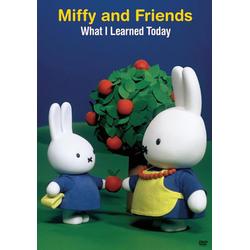
There is a 5 minute DVD of my daughters titled ‘Miffy and the shadow’ (Miffy is a little rabbit) that I often show before I start the Change Management Cooking Class workshop. At first the participants to the training are surprised, so I get their attention.

Miffy, the cute little bunny

Miffy and FriendsThe video is about how Miffy learns about the shadow in the classroom. Through the instructions of the teacher she becomes aware of light and shadow in her environment. Later we see her walking home while the sun sets and she notices her own shadow. At the dinner table she even tells her parents about what she learned.

However, at night she is very frightened by the moonlight shadow and she needs the support of her parents to calm her down. Her parents help her to make sense of it all and to link it to the concept that she learned about in class.

That’s quite a big step for Miffy, because although she was taught the concept of ’shadow’ in the classroom and although she demonstrated that she understood it to her parents at the dinner table, she had been unable to ‘use’ her knowledge in practice. She needed a gentle nudge to do that.

In case you would wonder: I do lecture in business schools and to MBA students and I use this DVD a lot! While I am switching off the DVD most of them still have that "what the fuck?" look on their faces and that is when I tell them that this is a good example of what Viginia Satir refers to as ‘foreign element’. However, there are two other insights that occur from this DVD that are fundamental to organizational change management. They are: how people develop and learn, and the importance of psychological safety.

How people learn

Miffy reveals about 90% of the major insights of development psychologists Jean Piaget and Jerome Bruner. Both of them have produced ground breaking insights on how people learn. Their main point is that knowing is a process rather than a product. In the words of Bruner(*): "We teach a subject not to produce little living libraries on that subject, but rather to get a student to think mathematically for himself, to consider matters as an historian does, to take part in the process of knowledge-getting."

Piaget, on the other hand, talks of a process of adapting. This is a constant give-and-take between modifying reality in order to fit into our minds (assimilation) and modifying our minds so the new reality can fit in (accommodation). The change-pain that results from this process is how I make a living.

In terms of Miffy’s shadow this means that the end of the ’shadow-class’ is where the process of learning begins. When the teaching stops, Miffy still needs to ‘learn’ 99% of the subject. This is fundamental for those who think that training alone is enough in order to make an organizational change happen. At the very best it is a starting point; From there on you will need to coach your way to the future state!

We are all afraid

And that is where the second insight is necessary: the psychological safety that is needed so badly in times of change. In order for this process of learning to happen, we need to make sure that the environment outside of the classroom is not one that stigmatizes mistakes.

As a starting point in times of change I think it is fair to say that we are all afraid. However, as a change agent, it is your own maturity, expressed by how well you deal with your own fear, which determines to what extent you will allow the process of learning to take place.

Pretty fundamental insights from a DVD for 4-year olds, don’t you think?

___________________
Bruner, J. S. (1966) Toward a Theory of Instruction, Cambridge, Mass.: Belkapp Press.