
Archive for the ‘Dave Ulrich’ Category

Not HR’s Best Friend

Saturday, October 18th, 2008

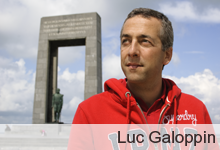
That’s me; I am about one inch away from being a persona non grata in the HR community. Primarily this was because I radically contradicted "the" Dave Ulrich when I stated "you are not an agent of change".  Last year, the people of HR Expert online were kind enough to publish this point of view in the article "An Organization that Is Serious about Processes Is Serious about HR".

But now there is a second reason for HR people to despise of my blunt opions on HR. In the October 2008 issue of HR Expert I now examine what it takes for HR to become a business partner. In short, the article covers a concrete three-step approach for HR to become a reliable business partner. The biggest takeaway for HR managers is an understanding about the importance of HR processes and how an ERP implementation should be used to support an HR strategy. Next to that we also outline some opportunities for managing expectations of HR.

 HR expert online logo

Both articles are based on my observations as an organizational change manager on large scale ERP implementations. During those implementations one is involved in the trenches in a weird way; offering people new roles and responsibilities; focusing on processes as a new way of working and … sharing their frustration as HR is never involved and most of the times completely ignoring the changes at hand.

HR Blues

Thursday, March 20th, 2008

In this article I make an inventory of my observations on HR. Although most of my points of view and arguments are a bit sharp, I cannot avoid concluding that HR can’t get any worse than it is today. But hey, when you’re at the bottom, at least you know which way is up. I am convinced that HR can do better than this, hence the title of this article.
“Not an Agent of Change”: One Year Later

About one year ago I had my five minutes of fame when I was all of a sudden on the frontpage of Workforce.com. All I had to do was saying that Dave Ulrich (*) chose the wrong pot to piss in by declaring HR as a change agent. In short, I argued that HR does not posses the skills that are required to manage change initiatives. Instead, HR’s strength is that of a ‘Continuity Agent’.

The only HR actions that have a positive impact take place at the beginning and at the end of a change program life cycle. This leads me to conclude that continuity, not change, is HR’s core business. Even when an organization is affected during the transition, HR should help you out in minimizing the disruption of continuity.

I did receive some reactions and some HR managers turned their backs on me, but until now nobody proved me wrong. That is: zero evidence on the fact that HR is an agent of change.

The Pitfall of Strategic HRM

And there is more. The second thing that causes severe headaches is the constant whining of HR managers that they should get a seat at the executive table. Let me cut this one short: HR managers should stop desiring a seat at the table of the executive committee because they will be raped and abused.

On top of that, as they get out of that room, HR will have lost all credibility as a fallback or buffer between workforce and management. The first thing people will ask as HR is still recovering from their C-suite domination is “whose side are you on anyway?”

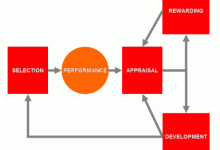
The good news? You don’t need a seat at the table in order to practice strategic HRM. In case you would not have noticed, strategic HRM is a matter of anchoring and tying your actions to the Michigan model. Besides the fact that 1982 is an excellent wine year, it is also the year that Tichy et al. published the well known ‘Michigan model’(*). Unlike good wine years, nothing exciting happened ever since on the level of qualitative HRM theory.
N-o-t-h-i-n-g.


The Michigan Model (1982)

Strategic HRM is quite simple, but it requires focus and discipline. Forget the hypes like ‘competence management’, ‘talent management’ and don’t even think about ‘organizational change management’. Instead, focus on ‘selection’, ‘performance’, ‘appraisal’, ‘rewarding’ and ‘development’ and foremost the processes that tie them together.

Look Around You: Everybody hates HR, Quality and IT

And it gets even worse than that. Did you ever wonder why HR, Quality and IT are the favorite scapegoats in almost all organizations, regardless of the sector and regardless of the country they are in? The reason is not that they are not included in the so-called ‘value-chain’. The real reason is that they don’t have a clue about what a value chain is.

As a result they are perceived as not adding value to the product or service that an organization produces. So all these supporting functions find themselves in a defensive position before they even had a fair chance to demonstrate their added value. And when you act from that position, you simply have no focus on productive stuff, you avoid responsibility and you forget what you were there for in the first place.

Getting Out of Your Box: Some Tips & Tricks

Instead of defending their position, HR directors would be better off creating an internal market for their services, aka: “what is your question to my answers?” Some IT managers are doing this already. So in order to get out of this disorder I would advise HR directors to have a look at the service oriented frameworks of service that IT departments are building (ITIL, CMM, etc.).

Second, it is about time that HR learns about proces thinking. HR processes: talk about them, design them, draw them, eat them, live them, measure them and improve them. Why? They visualize how HR adds value to the business.

As a third step towards becoming responsive and service oriented, HR directors should consider outsourcing in two directions:

A. Automation of basic HR processes (payroll, employee self service, manager self service)

B. Outsourcing of the business partner function to … the business itself. This brings about a different dynamic and a shared responsibility and focus on what really matters to the business.

Indeed, time has come for HR with balls, and like you I have been waiting for years for this transition to happen. Seems like it’s easier said than done. So here’s to all HR managers who run away from their own mess by saying they are change agents:
1. Please bring facts to the table that prove me wrong.
2. Wake up, get your act together and focus on HR processes
3. Get rid of the distractions: outsource the repetitive stuff and spend your time dealing with HR processes.
4. You are not a change agent. Live with it.

__________________
(*) In his 1997 book Human Resource Champions: The Next Agenda for Adding Value & Delivering Results (Harvard Business School Press, ISBN: 0875847196) Dave Ulrich challenges Human Resource professionals to define the value they create for the business. By doing so he distills these roles for Human Resources careers: strategic partner, administrative expert, employee champion and change agent.
(**) Tichy, Noel M., Fombrun, Charels J. & Devanna Mary A. (1982) Strategic Human Resource Management. Sloan Management Review, 23(2), 47-61.

Don’t Count on HR to drive the change!

Thursday, January 18th, 2007


Forget what Dave Ulrich (*) says!
Whenever the human side is involved, organizational change projects tend either to ignore it or to completely outsource it to the human resources (HR) department. Hopes, dreams, wishes, and expectations are never taken into account,and training, communication and coaching are restricted to the minimum. The attitude in most projects is exemplified by this statement: “We’ll take care of the process reengineering and the technical stuff; HR will do the soft stuff.”
However, there are two fundamental reasons why you should not count on HR to drive a change.


1. HR is Not a Change Agent
HR safeguards continuity in the organization. Let’s face it: By their very nature, the fundamental HR processes are aimed at safeguarding stability. But when you ask HR managers about the core competencies of their departments, they will tell you that the management of organizational change is on the forefront. They are wrong. The basic processes of HR and their accompanying goals are the following:

  • Recruiting and Selection => Goal: Employment Continuity
  • Training and Development => Goal: Knowledge and Skills Continuity
  • Performance Management and Appraisal => Goal: Performance Continuity
  • Compensation and Benefits => Goal: Stability in Personnel Costs
  • Work organization and Communication Systems => Goal: Social Stability

Therefore, HR should be approached as you would any other function in the organization,and they should be the first target of your change-management efforts.But there is more.

2. HR is an Agent of Continuity
As a support function, HR will be impacted indirectly by a reengineering effort and will most likely resist at first hand. Does that disqualify them from having any stake in the organizational change? Not at all.

Change always happens in three phases: Unfreezing, Changing, and Refreezing. As the key strength of HR is to stabilize the human side of an organization during and after a transition, it is their role to lead the Refreezing stage. In order for the change to stick onto the organization, you are going to use the HR department’s tools and methods.

Therefore, HR is one of the first targets to work with. The faster you can enlist them into becoming a continuity agent, the better. Just don’t expect them to be on the same page from day one, as they—like everybody else—will resist the change in the beginning.

Conclusion: HR as a Co-Pilot in Long-Term Planning
From my experience, the only HR actions that have a positive impact take place at the beginning and at the end of a change program lifecycle. This leads me to conclude that continuity and not change is HR’s core business. Even when the organization is affected during the transition, HR should help you out in minimizing the disruption of continuity.

As an example, program staffing of key people is a task that needs to be conducted in close alignment with HR as it should involve career perspectives and long-term accountability. Gradually, as the program comes to a close, HR needs to become the owner of the deliverables regarding learning, performance, organization, and communication.

The role of HR in this case is one of sustaining the change and integrating it into its standards and procedures. In other words: safeguarding stability and continuity of the new organization.

—————————-
(*) In his 1997 book Human Resource Champions: The Next Agenda for Adding Value & Delivering Results (Harvard Business School Press, ISBN: 0875847196) Dave Ulrich challenges Human Resource professionals to define the value they create for the business. By doing so he distills these roles for Human Resources careers: strategic partner, administrative expert, employee champion and change agent.