
Archive for the ‘Cass Sunstein’ Category

Power to the Architects

Tuesday, April 6th, 2010

As we closed the first decade of this century, Elephants entered the scene of Organizational Change Management, but at the same time our profession became more actionable. After decades of literature that mainly explained the process of change, the focus is now on how we can shape our environment.

Instead of laying the full responsibility for change in the hands of the leaders of our organizations, we now see a shift of attention towards things that are within the reach of everyone.

In a recent book called Nudge: Improving Decisions About Health, Wealth, and Happiness, economist Richard Thaler and legal scholar Cass Sunstein explore the psychology of our every day decision making and argue that we make poor decisions due to the architecture of how choices are presented to us.

Choice architecture is the careful design of the environments in which people make choices. According to Thaler: “If anything you do influences the way people choose, then you are a choice architect. Choice architects must choose something. You have to meddle. For example, you can’t design a neutral building. There is no such thing. A building must have doors, elevators, restrooms. All of these details influence choices people make.

Question: why on earth should you care about architecture as an organizational change practioner?
Answer: Because every interaction you have with your target group is an intervention – like it or not. Every time you interact you are shaping the response unknowingly.

There are three key features about choice architecture that you need to manage:

1. The DefaultDefault is what happens if you do nothing, such as leaving your computer unused until the screen saver appears” Thaler says. “The main lesson from psychology on this is that default options are sticky. Whatever you choose as the default has a very good chance of being selected. If you are the choice architect, you need to spend a lot of time thinking about what those default options should be.

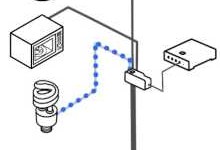
2. Feedback People respond to feedback; for instance, someone designed light bulbs that glow darker shades of red as homes use higher levels of energy. According to the authors, such devices helped reduce energy use in peak periods by 40 percent in Southern California.

3. Expect Error By expecting error, the authors point to the design of the Paris subway card, which allows users to insert it into an electronic turnstile in any of four ways to gain entrance to the subway. “Compare that to exiting the parking garages of Chicago,” they say, “You have to put your credit card in and there are four possible ways up, down, left, right and exactly one works. This is the difference between good and bad design.

Remember: you are no longer an ‘organizational-change-management-theory-brainiac’. From the moment you take action, you are a Choice Architect!

Meet my Dad

Sunday, February 28th, 2010

What is the value of feedback when I can’t frame it, understand it or act upon it? Will I be labeled ‘resistant’ if I ask to reframe it over and over again? Feedback – yes but… feedback that is not actionable and measurable in my world will not empower me.
Blessed with a pair of craftsman hands, a good sense of humor and a healthy dose of common sense, my dad challenges me to widen my perspective from time to time. And he beats any management guru, scholar or business school with the advice that he gave me upon graduating:

“Do right and fear no one.”
- my dad

Kyoto & Copenhagen

Recently my dad installed a new condensing boiler and the system is said save a lot of energy compared to his 30 year old oil boiler. As one thing leads to another, my dad soon started looking for a measure. How much am I saving compared to my old boiler? Although you wouldn’t allow my dad to join the Davos, Kyoto or Copenhagen conferences his quest is one of high importance and high direct impact on current levels of energy spending. The question is the following: ‘How can I see the Euro amount of energy I am spending?’.

Struggle for Meaning

So here is what we did: we called the gas distribution company and asked how we can track our spending in Euro. Turns out that it was the first time they were confronted with this question. But after a few minutes the helpful helpdesk correspondent managed to get an amount of Euro Per KiloWatt-hour.

Unfortunately there is no such thing as a KiloWatt-hour meter on our consumer side. We do have a meter, but it reads volume (cube-meters). It would take a simple conversion with a factor 10 to make the calculation. However, this would not be a good measure for monitoring the energy spending because there are about 10 other parameters that influence the final invoice.

The Whyway

Contrasting this simple question to the TV news reports on Copenhagen, Kyoto and Davos I imagined a Yes Men scenario: stating the obvious question in the middle of a powerful crowd of leaders who are trying very hard to look the other way.

My dad is asking for a simple dashboard to monitor his energy spending; stating that he, his neighbors and every family can reduce 25% of their energy spending.  If only they had a proper dashboard to monitor. Like the dashboard of a car, the display of a gasoline pump or simpler: the price tags in a grocery store.

So we rang the gass company about three times until… Well. Until it felt wrong. We felt like behaving annoying and offensive. Embarrassed. Uncomfortable. That’s the price you pay for asking WHY too many times.

In his 2004 bestseller The Seven Day Weekend, management guru Ricardo Semler stesses the importance of asking why. It is one of the most important mechanisms for navigating out of the control-zone and back into the area of what matters most. In his company SEMCO, they even have a name of it: they call it the Whyway.

But it takes guts and perseverance according to Semler:

“Ask why. Ask it all the time, ask it any day, every day, and always ask it three times in a row. This doesn’t come naturally. People are conditioned to recoil from questioning too much. First, it can be perceived as rude. Second, it can be dangerous, implying that we’re ignorant or uninformed. Third, it means everything we think we know may turn out to be incorrect or incomplete. Last, management is usually threatened by the prospect of employees who question continually. But mostly, it means putting aside all the rote or pat answers.”

The Result? The Wattson!

My dad is not a university professor or an academic of any kind. Instead he spent his life on the production shop floor experiencing first hand what works and what doesn’t. So when he asks a ‘why’ question he is not playing an intellectual game. He is on to something.

How much am I spending on gas? Why can’t we monitor our energy spending? Why can I see my energy spending instantly when I drive my car but not when I am heating my house?

As a coincidence I was reading Nudge: Improving Decisions About Health, Wealth, and Happiness, by economist Richard Thaler and legal scholar Cass Sunstein. They explore he psychology of our every day decision making and argue that we make poor decisions due to the architecture of how choices are presented to us.

As it turns out my dad and I have nothing to be embarrassed about because one of the nudges that they illustrate responds almost exactly to our monitoring quest. Have a look at the Wattson device below:

The Wattson monitors our energy spending for electricity in a currency we understand and care about. We like that. We want that. And we also want one for the gas spending!

The Takeaway

What can organizational change practitioners learn from this story?

First,  that the ‘whyway’ is the road less traveled because people run the risk of being labeled ‘resistant’ in a split second. Peter Block warns against the paranoid habit of some consultants interpreting every line manager’s objections as resistance (see: Sometimes it’s not resistance).

Second, ‘why’-people may drive you crazy, but they prevent you from project cocooning and other defense mechanisms. Think about it: what would happen if you were to replace your ‘Resistance’-labeling-machine with a ‘Whyway’-labeling-machine? The label is not an ending point to ditch people into a category – period. Rather, it would be a starting point to improve and fine-tune the project at hand.

Finally, involving the whyway people creates buy-in and stimulates their ownership of the project results. Remember: Why-people take a risk because they care. Why-people take the risk of feeling embarrassed because they are committed. Why-people leave their comfort-zone for a good cause. Outside their comfort-zone they are vulnerable. And if we follow common change-management methodology we are most likely to label them as resistant and to treat them in a belittling way. Should we not suspect ourselves in the first place?

Whyway-people go a long way to reframe the feedback they receive. Feedback that is actionable and measurable in a currency they care about. Actionable and measurable feedback empowers people and accellerates their change-readiness … by 25 %. OK – this is a bold statement. So bring it on. Prove me wrong. For I do right and fear no one.

Is your communication SRC-proof?

Tuesday, January 26th, 2010

Communication is not the message sent but the message received. But when the receiver reacts opposite to our expectations we tend to blame the receiver. You are right and they are wrong. There is a name for this game;  it’s called “game over“.

But hang on – here is the good news: if you to stop being right and start to investigate the choice architecture of your message, there is a great chance for you to improve your communication.

In a recent book called Nudge: Improving Decisions About Health, Wealth, and Happiness, economist Richard Thaler and legal scholar Cass Sunstein explore the psychology of our every day decision making and argue that we make poor decisions due to the architecture of how choices are presented to us.

This includes food decisions, investment decisions and all kinds of well-informed decisions (that’s the frightening part!).

Choice Architecture and Door Handles

Below is a excerpt from chapter 5 explaining the core ingredient of their book “Choice Architecture”

“Early in Thaler’s career he was teaching a class on managerial decision making to business school students. Students would sometimes leave class early to go for job interviews (or a golf game) and would try to sneak out of the room as surreptitiously as possible. Unfortunately for them, the only way out of the room was though the double door in front in full view of the entire class (though not directly in Thaler’s line of sight). The doors were equipped large handsome wood handles, vertically mounted with cylindrical pull about two feet in length. When the students came to these doors, they were faced with two competing instincts.
One instinct says that to leave a room you have to push the door. The other instinct says, when faced with large wooden handles that are obviously designed to be grabbed, you pull. It turns out that the latter instinct trumps the former, and every student leaving the room began by pulling on the handle. Alas, the door opened outward.”

Further in that chapter the authors continue:
“At one point in the semester, Thaler pointed this out to the class as one embarrassed student was pulling the door handle while trying to escape the classroom. Thereafter, as a student got up to leave, the rest of the class would eagerly wait to see whether the student would push or pull. Amazingly, most still pulled!

With this example Thaler and Sunstein point out that the doors display bad choice architecture because they violate a simple psychological principle called Stimulus Response Compatibility (SRC). SRC means that you want the signal you receive (the stimulus) to be consistent with the desired action. Flat plates say “push me” and big handles say “pull me”. So don’t expect people to push big handles! This is a failure of architecture to accommodate to the basic principles of human psychology.

From Handles to Heamophilia

Saying “red” when you see a red light go on is an example of high compatibility. Having to say “green” when a red light goes on is an example of low compatibility. This has far reaching consequences, even in the medical world. Below is an example that I have experienced multiple times.

Patients with haemophilia A cannot produce a protein known as factor VIII (FVIII) and must get it from somewhere else. KOGENATE® Bayer is a FVIII product that a patient can use instead of natural FVIII. KOGENATE® Bayer is a great product which improves the lives of many haemophilia patients. But it’s also an expensive product, burdening social security with more than 100.000,- Euro per patient per year.

Needless to say: we better don’t waste a drip of this precious and expensive product! Yet, this is precisely where the engineers of Bayer have failed to cater for some SRC into the design of their injection bottles. Have a closer look at the instructions below: the fluid (drawn in black) is in one part and needs to be mixed with the powder in the other part. Movements A to J must be performed a few minutes prior to injection.

To cut a long story short: figure C and D is where it mostly goes wrong – even with well trained nurses, parents and patients. The normal way of using ‘fluid-and-powder’ products is to screw on and inject. That is what the design communicates: “screw and inject”. Yet – as you can see in C and D, there need to be two separate pushes (followed by a ‘click’) prior to adding the fluid. The latter is so counter intuitive that I have literally seen thousands Euros being flushed onto the ground before my eyes.

Even trained parents and nurses who are familiar with this product need their full attention or they miss the crucial C and D.

OK for door handles. Not OK for social security.

From Heamophilia to SAP

To me the link with communication in big organizational change projects is obvious: communications are vital and precious for the health of an organization. And expensive too. Nevertheless communication sometimes turns out in the opposite direction. This is mostly due to failed choice architecture and untested stimuls response compatibility. When respondents fill out the wrong details, use the wrong settings or insert their card upside-down, it is easy to call them ’stupid users’ or to tell them RTFM (this stands for “Read The F** Manual”).

I still remember the day that the logistics responsible typed the article number in the weight field when we were implementing SAP in a large chemical plant. The automatic interface that we were so proud of automatically blocked all the transports available of our 51 neighbouring plants. We had to write a program to unlock all those transports. And guess what we said: ’stupid user’. However, this did not prevent other users from committing that same mistake.

From SAP to Traffic

Next time you build a survey or a communication, a note or a manual requiring your receivers to fill out something, to use a system or to take an action of any kind, consider how SRC-proof your communication is by testing its usability at full length PRIOR to sending it out.

As a final thought I could easily link this idea to the communication articles I have written before. Whenever I talk about communication I tend to use the metaphor of traffic and this one fits in pretty well; If communication would be a mission to bring a vehicle (i.e. your message) from point A to point B, then you want this vehicle to be equipped with an SRC button. SRC will avoid your vehicle from going in the opposite direction when you accelerate.