

Archive for the ‘Attention’ Category

Mind the Stopgap!

Saturday, March 13th, 2010

You should never be implementing SAP for the sake of SAP. The investment should be directly linked to the realization of business benefits over the course of a payback period. Without benefits, SAP is just a stopgap. An expensive stopgap.

Stop-gap / stäp.gap/
noun. a temporary way of dealing with a problem instead of satisfying the real need.

More often than not, project managers find themselves in the situation that their organization ‘is going wall-to-wall SAP,’ and they are then left to implement the chosen application without a clear understanding of the expected benefits and the organizational changes that will be required.

The Formula

Here is what happens next as the project managers work their way out: NT + OO = EOO (New Technology + Old Organization = Expensive Old Organization)

Any SAP implementation should be embedded in a fundamental business initiative to transform the business. You are not implementing SAP for the sake of SAP or because of its features like multi- currency, the ability to define sales organizations, reporting, etc.  Good old Michael Hammer knew this as no other.

You are doing so because you want to gain benefits that are essential for the survival of the organization. Technology is an enabler on that path. But if you fail to paint a clear picture of the destination it is a stopgap. The technology is rolled out, there is a successful go-live; pizza, party and then everybody goes home.

It ain’t over ’till it’s over

Benefits formulate the goal of a program in terms of the success of your organization. These are the beacons, guiding the program to develop in the right direction. Benefits are the basis of the business case to justify the cost of the SAP implementation. They make outcomes concrete, measurable and above all: actionable.

The point is that the project ain’t over till the benefits are realized! Implementing SAP is just a step on the path towards realizing the benefits.

Destination Postcard

In an ideal world, the decision to implement SAP fits in an overall business strategic program derived from the company’s business vision. In many cases, however, the decision to implement SAP is based upon a combination of less compelling operational features, listed below:
- Legacy systems need to be replaced;
- More integration of information is required;
- Better integration of the IT landscape is needed;
- The current version of SAP will no longer be supported;
- Common ways of working need to be implemented;
- The supplier of current systems doesn’t provide proper support, or worse, is no longer financially stable;
- Data integrity;
- Improved continuity and enhanced disaster-recovery planning

Yawn

Yawn-provoking indeed. But here’s the thing: unless you are able to convert the above mentioned reasons into benefits that serve the organizations strategy, you will not be able to win the hearts of your stakeholders. This means: a compelling vision AND actionable benefits that will prevent to see the SAP implementation as an end in itself.

In short: If you are unable to come up with quantifiable benefits, you should consider not moving forward with the SAP implementation. If you do, you risk getting lost in the fog without a beacon to steer for.

Outcomes are the destination postcard (you can see the picture and you want to go there), and benefits are the black-and-white writing on the back of the postcard (the exact coordinates). SAP is a fuel station on the way to the destination. If SAP is figuring either on the front or the back of your postcard you’d better cancel your travel plans. It’s not about stopgaping symptoms with SAP, it’s about treating the real causes with benefits realization!

Parenting as a Management Skill … Huh? (part 7)

Tuesday, November 10th, 2009

A few weeks ago a friend told me that the only thing he can do as a parent is to stand behind his kids – both hands open – saying: ‘I will cath you if you fall". He continued: "For example: a three year old carrying a big bottle from the kitchen to the dinner table is a breathtaking sight for most parents. We are tempted to say ‘careful’, ‘don’t let it fall’, ‘hold it with both hands’, etc. Now, if the bottle arrives at the dinner table unharmed, is that THANKS TO our verbal support or is it NOTWITHSTANDING our comment?". 

How would our children grow and learn if we would be more at ease with the circumstances they are in? Whenever we comment / advise / suggest our children with all of our hearts, our support and the lessons learned from our own from bruises and breakdowns; aren’t we just pushing them into learned helplessness?

In my opinion, this is the very point where the skill of education stops and the art of parenting starts. Like a balancing act, both empowerment and protection are necessary for a healthy development.


As the above drawing indicates, the development of children (and grown-ups) needs a perfect mix of nudging and nurturing; a balance between empowerment and protection. It is exactly at that same point where the skill of management stops and the art of leadership starts.

To your opinion, where is the best place to learn that art? At Harvard or at home?

Related articles:
Parenting as a Management Skill … Huh? (part 6) – September 21st, 2009
Parenting as a Management Skill … Huh? (part 5) – May 24th, 2009
Parenting as a Management Skill … Huh? (part 4) – March 1st, 2009
Parenting as a Management Skill … Huh? (part 3) – February 21st, 2009
Parenting as a Management Skill … Huh? (part 2) – February 16th, 2009
Parenting as a Management Skill … Huh? (part 1) – February 9th, 2009

Top-10 signs your employee survey needs to change

Saturday, October 3rd, 2009

The below movie shows an interview with Curt Coffman, co-author of First, Break All the Rules. In my opinion his top ten covers all the pitfalls one can encounter when performing employee surveys.

#10 Your survey hasn’t changed since Bob Dole ran for president;
#9 Your survey has more items than your accounting system;
#8 Employees and managers feel more helpless after completing the survey;
#7 Your customer loyalty scores still have not improved;
#6 You are paying more than $10 per employee for data collection and reporting;
#5 By the time your survey vendor returns the data, your workforce has turned over;
#4 Employee surveys, what are those?…;
#3 You need a 3" binder to hold one report;
#2 The dog ate your action plans;
#1 You keep doing what you’ve been doing and expect a different result.
("When you change the way you look at things, the things you look at change")

My both thumbs up for this powerful summary!!

PS: Thank you Craig Smith for pointing me to this video.

Rituals and Habits

Monday, August 10th, 2009

You may think of rituals as an exotic thing from far-away cultures and  weird religious communities. Well, it is; but to the same extent it is intimately woven into the way we live our daily lives. Rituals occur wherever more than one person do something together. That is: in tribes, religions, countries, monasties and clubs; but also at work, in families and between partners.

Rituals
We all need rituals. A ritual is a way of shaping reality so you can deal with it. And if the way you and your community fellows have that thing in common it becomes a distinctive feature of your community. The most obvious examples include visual appearances: Aboriginals have white body paint, doctors in a hospital wear white coats, on National Geographic we can see how boys turn into hunters through a manhood ritual, where I live, marriage is a ritual declaring monogamy and the bride has a white dress, etc.

The not-so-obvious examples include: making PowerPoint slideshows for whatever you want to communicate at work but not at home (thank God!), budgeting discussions and the complete cycle of a fiscal year, coffee, KPI’s and Balanced Scorecards (they are the ‘nec plus ultra’ of a tribal belief in numbers), New year, wearing a tie on certain occasions, casual Friday and not wearing a tie, etc.

When looking at exotic or ancient cultures we tend to talk about rites and symbols as if we are way more civilized than that. However, our day-to-day lives are far more abundant with rites and symbols of all kinds, we only have different names for them. In our world we call them agreements, rules, legislation, organization, structure, strategy, common sense, logic, etc.

Habits
A habit is the same as a ritual, but on the individual level. It’s how we deal with reality. We do certain things our own way. Little things. And it’s the sum of a million simple things a day that give us a sense of security and identity. Habit is the daily success of forgetting that the nature of reality is unpredictable and groundless. It’s never the same river twice. We would go crazy if we were to approach reality without rituals and habits.

Addictions
An addiction is a habit exposed in a socially unacceptable way: where habit clashes with ritual. In my opinion an addiction has very little to do with what is good or bad for you, for good and bad are measures set by ritual. Get it?

Attention
I’m sure you can think of another million rituals and habits we use in our world. In fact, not an hour goes by without us shrinking whatever is happening around us to a digestible taste, size and portion by means of ritual, habit or addiction.

There are several ways to become aware of this mechanism.
- Listen to children: It just takes the fresh look of a child to ask ‘why?’ from time to time.
- Connect with weird people – the complete outsiders in rank and order of your community
- Limbo: when you are heavily involved in a change that determines the course of your life and habits drastically. For example when a person close to you deceases, or you lose your job.
- Read all of Dr Suess books, especially The Sneetches.

Takeaway
The takeaway for organizational change managers is quite important. The first thing you bump into whenever you want to implement an organizational change is inertia caused by rituals and habits.

Instead of labeling them as ‘resistance’, we’d better approach them with respect, because they define the very boundaries of people’s comfort zones.

How do you appraise?

Sunday, June 14th, 2009

‘Forward’ instead of ‘backward’

In the light of last week’s post (which sparked an interesting discussion on the LinkedIn Organizational Change Practitioners group) a fascinating point of view was unveiled. As one of the participants in te discussion put it:

"Instead of looking to recruit people who already have all the qualifications, we should be looking for people with the ability and willingness to develop the skills and knowledge and allow them to grow into the job."

This shows that we should actually be recruiting-FORWARD – not only because recruiting BACKWARD (by looking in the rearview mirror of predictability) is not satisfying; but rather because we need to spark potential (as opposed to ‘actual’) performance. In that sense, a recruitment interview is more than a measurement or an observation; it is a process of becoming aware of the potential (from one side) and becoming committed to the challenge (from the other side of the table). This ‘forward’ way of thinking reverses the dynamics completely.

‘Giving an A’

The same is true for performance appraisals. Ben Zander, conductor for the Boston Philharmonic Orchestra, was faced with the same problem every year for 25 years: Teaching students who were in such a chronic state of anxiety over the measurement of their performance, they were reluctant to take creative risks. So he changed his appraisal strategy: he decided to give everyone an A, at the beginning of the course. The A was not intended as a way to measure someone’s performance against standards, but as an instrument to open them up to new possibilities.

Students were required to write a letter that began with “Dear Mr. Zander, I got my A because…” and they had to describe in as much detail as possible, how they came to achieve this “extraordinary grade". Students must “place themselves in the future, looking ‘back’, and report on all the insights they acquired and the milestones they attained during the year, as if those accomplishments were already in the past.

According to Zander “the A is an invention that creates possibilities for both mentor and student, manager and employee, or for any human interaction.” Zander applied this kind of thinking to his conducting and it transformed him from being a dictator, to an orchestrator of collaboration. This new openness in communication had a huge effect on the morale of the orchestra, improving the performance of both conductor and players.

What would happen if we started to recruit and appraise by giving an A?

Related articles:
-
Music and Leadership – Sunday, July 20th, 2008
- Always Remember Rule Number 6! – Thursday, December 6th, 2007 
-
Redefining ‘Responsibility’ – Monday, October 22nd, 2007

How do you recruit?

Sunday, June 7th, 2009

I was just wondering how the hell I can be sure that the person I am interviewing is the right man/woman for the position. Sure, making a clear description of the skills, knowledge and attitudes we need in order to get the job done is a must; and so is the selection of CV’s that come your way.

But once I’ve taken those steps, I have found that the predictive validity of my interviewing skills and the list of smart and astute questions I ask is not that reassuring. Being aware of all that psychometric stuff like the halo effect, STAR questions and all that did not make the job any easier. It just left me feeling a bit more guilty (‘I should have known’)

I have come across candidates that I hired just because "we need somebody yesterday", zero confidence that they could get the job done, etc… and they turn out to be the best performers! On the other hand – and admittedly more frequent – I have recruited people with high expectations, a bright CV, outstanding answers, etc. and they turn out to be complete zero’s. On other occasions I have recruited people whilst heavily investing in a headhunter and a recruiter, just to see the new hire leave after 6 months and tons of education (note: I live in Belgium, where you are in no way insured against that phenomenon). As a result I feel a bit more guilty (‘I should have managed better’).

Though the years I’ve built up a set of fundamental question marks, such as:
- Which are the interview blind spots I am missing?;
- Am I setting the wrong expectations?
- Am I mismanaging by sticking to my own wrong expectations?
- Who am I being that their eyes aren’t shining?
- Etc.

So I was wondering ‘How do other people recruit?’. Until one day I met Eddy, the owner of a homecare nursery that employs about 30 nurses. As you may guess, nursing is a profession that requires quite some professional vocation. The jobs is tough, the pay is low, the working schedules are irregular, time pressure is high and not all patients are friendly people. In short: if you’re not made for this job, you’re not gonna make it through a working week.

Eddy told me that he had a particular way of recruiting. In fact, he was not even like recruiting at all – it was confessing.  Each time he would invite the candidates based on the same criteria as I did: a selection of the CV’s according to the job description. So far so good. The next thing he did is inviting the candidate and then he started to talk…for more than one hour long… about his passion for nursing and about where he thinks the heart and soul of good nursing lies. About the results of their work, rather than the list of tasks. About the quality he is entitled to as a patient when he gets old and helpless. He asks zero questions. Then he invites the candidate for a second conversation a few days later. A lot of people call their office before the second conversation in order to cancel the second meeting.

Those that do show up are committed and perform above expectations. Note that Eddy is an extremely empowering manager, trusting people to an extreme extent. And it pays, as they are known for being the ‘home care nurses that care more’.

Wow… passion and excellence woven into what I would call ‘viral interviewing’.

Parenting as a Management Skill … Huh? (part 5)

Sunday, May 24th, 2009

In addition to the articles on parenting as a management skill that I posted in February 2009, there is one more insight I’d like to add. I found out that the epicenter of organizational change management is hidden in the simple mechanism of cause-and-effect. And I found out about it by being home between television time and dinner time on an average working day.

When I ask my 3 year old son to stop watching television and to come to the dinner table, I’m most likely to receive a ‘No!’ and when I persist in my plan, tears and other forms of ‘Resistance’ will follow for the next ten minutes or so.

However, when I get involved in his frame of reference, I tell him that the television will be shut down when the clock turns seven or when the episode he is watching ends. I can also tell him he can count to three for me to turn off the television, etc. It’s a game he gladly subscribes to; running to the dinner table – eager to start dinner.

What happened here? In the first situation I would be using my parental authority to reinforce an action. This likely results in ‘Revenge’, ‘Regret’ or ‘Rescue’. In the second scenario I am using a different approach: instead of pushing harder I take one step back – BUT I STICK TO THE OBJECTIVE, i.e. television out and on to the dinner table.

By stepping back I inverse the cause-and-effect relationship: I let him be the cause instead of the effect of the situation. This is more likely to result in a ‘Responsible‘ response: I give him the opportunity or the ‘ability‘ to ‘respond‘ positively to my request.

The same is true for organizational change efforts. The point is that you can achieve most of the goals by underscoring the objectives, stepping back and then leaving people the opportunity to become involved in the solution. Instead of pushing harder straight on to ‘Resistance’ you are stepping back and allowing ‘Relationship’ and ‘Respect’.

I bet one can’t learn that lesson so profoundly and deeply at Harvard or Wharton the way I did between the dinner table and the TV set.

Related articles:
Parenting as a Management Skill … Huh? (part 4) – March 1st, 2009
Parenting as a Management Skill … Huh? (part 3) – February 21st, 2009
Parenting as a Management Skill … Huh? (part 2) – February 16th, 2009
Parenting as a Management Skill … Huh? (part 1) – February 9th, 2009

Quality Time is a Lie

Sunday, April 26th, 2009

Crushed by the sadness of an illusion that evaporates. Quality time is a lie. And everything else that is based on this idea is falling apart.

Coming home from a hard day or a tough week at work I used to say to myself: ‘from now on it’s quality time’. Quality time is a time-slot dedicated to high quality. Instant happiness; no place for weak moments. And since this seems to work for everyone else, instant happiness is the norm. So if it doesn’t work out you are not OK or your family is not OK. Welcome to frustration station.

Instant Happiness… NOT!
Quality time is top of the pops in the category ‘Happy life – the way it should work out’. Pretty stigmatizing – so shut up and don’t you dare to question it.

The truth is that I was surprised to find that work, work, work and then – quick snap – quality time doesn’t work out that well. First of all it puts a tremendous pressure on the time-slot with significant others. All of a sudden unwinding is not allowed. Second, it does not take a genius to figure out that the stress and exhaustion  of work, work, work do not lead to the kindness and sensitivity of so-called quality-time.

Before the joy of quality time can appear we need to unwind, be tired, be bored, find our place in the family setting, argue and work our way in. But we refuse to do so – because it eats up the precious time-slot. So we find ourselves in a strange, tense and phony situation.

Quantity Time
The solution is not Prozac or cocaine. The solution is quantity time. Yes – work, work, work at work and then: work, work, work on a different level: trusting oneself, finding an emotional balance and taking care of oneself. Your significant others need quantity time – and you do too! A fixed time-slot and high expectations are the last thing you need if you want that to occur.

By the way, did you note that when it comes to balancing the human factors at work,  measurements and KPI’s are the best recipe for failure?

So let’s redefine quality time as a moment we set apart at work. Quality time for an issue we all agree is critical. Quality time for a problem that is worth waiting for until all stakeholders have shared their concerns. Quality time as a strategic instrument.

Please let us stop confusing this term with moments that simply stop existing once you measure them on a time-scale and benchmark on unrealistic expectations. Let’s be professional during work and let’s be ourselves at home.

Related articles:
Parenting as a Management Skill … Huh? (part 4) – March 1st, 2009
Parenting as a Management Skill … Huh? (part 3) – February 21st, 2009
Parenting as a Management Skill … Huh? (part 2) – February 16th, 2009
Parenting as a Management Skill … Huh? (part 1) – February 9th, 2009
Dump your Blackberry and get a life! – September 9th, 2007

Once upon a time…

Monday, April 13th, 2009

A fairy tale for the suffering in the workplace.

Once upon a time there was a pond with the most exceptional fish one could think of. The man who took care of the pond wanted it to be the best pond of all times, and so did the fish.

The man took care of everything because he didn’t trust a single fish. Instead of feeding them and providing them with oxygen, he hooked them up each day. That way, he knew exactly what they were doing and how they were doing it. Each day he weighed each fish, pushed the food down their throat and told them exactly what they should do before he let them into the water again.

The man was quite proud of the way he controlled it all. Any time of the day anyone could ask how the pond was doing and he would explain in detail with colors, graphics, metrics and key performance indicators. By all measurements, this was the best pond of all times!

In order to control the fish efficiently the man threw out nasty bait: a talking worm telling the fish how bad their work was, how the quality sucked, how they were behind schedule and how it made the man nervous as hell. The man thought this kind of bait would keep the fish sharp. And it did. The bait was simply irresistible.

Below the water surface, Red Fish, Blue Fish and Yellow Fish caught every nasty worm. They were smart fish; strong and bright-colored. Each time the bait was thrown out it was only a matter of seconds before they would catch that nasty worm. Red, Blue and Yellow were the best of breed.

• Red Fish was always the first to swallow the bait; “that’s not true” he said; “I’m going to tell him!” But the rage and the misalignment grew with each catch.
• Blue Fish swallowed the bait differently; with each catch his self doubt grew, for he started to believe the accusations that worm was throwing at him.
• Yellow Fish was smarter than that. He would not fight it like Red Fish, nor feel guilty about it like Blue Fish. His approach was to solve the man’s problem. So he swallowed the bait each time, thinking he could solve the man’s problem.

These smart fish were all different in how they approached the nasty worm – so much is true. But there was one thing they all had in common: they always swallowed the bait by their own instinct and each time they got back into the water they felt sore. They didn’t know why; they were bubbled…

And then one day a duck landed on the pond. He said he had seen these situations in other ponds as well, but the fish didn’t pay attention to the duck; for they were too busy swallowing the bait that was thrown at them. Days went by and from the surface the duck could see the daily ritual the fish went through. These smart fish suffered, but they were too proud to admit it. After all, they were the best of breed and besides a duck is a duck. What could he possibly know about fish?

Until one day the hooks left them aching so hard that they needed some time to recover, so they figured they might as well listen to the duck. “OK duck, let’s hear it” Red Fish said. “Things are not OK down here, so tell us what you think is going on.” Blue Fish said.

It’s fairly simple”, answered the duck; “from up here it is obvious how you are exaggerating on the R-side”. “The R-side; what the hell is that?!” Yellow Fish replied. The duck patiently continued:
You see, there is a pattern in your daily suffering:
• Red Fish is driven by Revenge. That is the first R – and he is left with resentment;
• Blue Fish is driven by Regret. That is the second R, which leaves him feeling guilty;
• And you, Yellow Fish, you get hooked because you try to Rescue the man, and in the end you are scared because it didn’t work out as planned.
There is just one thing you should know about these R’s: they will always get you hooked

But that’s our nature – don’t you understand?” Red Fish said. “This pond is our destiny- there is nothing we can do about it” Blue fish said. Yellow Fish concluded: “The only way out is to change the bait”.

Hang on – there is another way out”, the duck said, “but it will require you to use a different R than you are doing today.
• I’m not asking you to change your nature, Red Fish, but you need to become aware of it;
• I’m not telling you to change for a better pond, Blue Fish, but you can think of yourself as the pond instead of the fish;
• And finally, Yellow Fish, you cannot change the bait that is thrown at you – you just need to know that you can choose not to swallow it.
So the alternative R I am talking about is called Responsibility.

The fish were bubbled…

Just try it – you have nothing to lose. When you approach the bait with Responsibility, you will be able to stop and capture the useful information without getting hooked.” Because the fish had no other alternative they decided to try this crazy idea. Days went by before they could turn off the automatic pilot that hooked them.

Eventually, they did it and they reported back to the duck:
We managed not to get hooked for a few days now.” Red Fish said. “And what were your findings?” the duck replied. “Well, it’s hard.” Blue Fish said, “because it needs all of my attention. But now at least the pain is gone and we continue our work.” Yellow Fish thoughtfully added: “This is almost as difficult as swimming upstream.

Indeed”, said the duck “approaching nasty bait with Responsibility is as hard as swimming upstream. Responsibility means that you can choose how you respond to a situation. And it’s not easy. Just remember that it’s the upstream swimming that makes you stronger!

The man never changed. Neither did the bait. But the fish grew stonger each time they realized that there is always a choice in how they respond to a situation.

Happy Easter!

What on earth are we communicating for?

Sunday, March 15th, 2009

In a 2008 article I stated that communication is not the message sent, but the message received.  I also wrote about the anatomy of a communication and why it should be tailored according to the information needs of the receiver

To summarize these articles, one could say that we’ve tackled two dimensions of communication: 
1. The FORMAT: there is an optimal anatomy for effective communication, it’s called Know-Feel- Do.
2. The QUANTITY: more information is not always better; one should underscore certain boundaries and then explore the topic within those boundaries.

Ok – fair enough – but how about the QUALITY of communication?

What should be the result of succesful communication?

At first you may think this is a rethoric question – one that needs no answer; a statement. We communicate in order to get our point across. Period. So that’s what we do – day in, day out, presenting, advertising, emailing, meeting, etc.  But when we measure the success of those communications at the receiver’s end, a strange pattern seems to unfold.

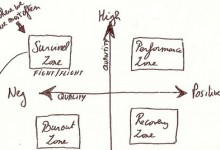
It seems that the quality of a communication is determined by the extent to which the receiver feels understood and involved, rather than by the amount or the quality of information. In other words: it is the relationship, rather than the content which determines the quality of a communication.

It’s hidden in the word: "Communication" requires "community" in order to work, so any exchange of information that does not result into being in relationship is actually non-communication. In that sense, good communication is more about receiving and acknowledging  than about sending. Stephen Covey warns that giving out advice before having empathetically understood a person and their situation will likely result in rejection of that advice. He makes this point pretty well in his 1989 book The Seven Habits Highly Effective People when he declares Habit 5" – Seek First to Understand, Then to be Understood. 

What does this mean for organizational change practitioners?

In the course of organizational change programs it is even more important to ensure your message gets across. The messages you need to convey are not always the most desired or positive ones, and yet we need to ensure to take the shortest path to people’s hearts, minds and hands.

The below picture was drawn in a discussion on this topic. We take the Kuebler-Ross cycle of change as a given. This is a natural process that all of us go through when we are confronted with any change. The point is that people need time to make sense of the change pains. It’s a fact of life (or should I say ‘death’ instead?).

Of course we want to increase the speed of change.  People – and that includes you and me – will only do what they understand, and they will be even more likely to follow your advice when they feel understood.  This means we should be as creative as we possibly can in involving them and making them a co-sensemaker and a co-creator of the new reality you need to put in place.

Accelerating sense-making means shutting up, listening, acknowledging the communication so as to create a relationship with the receiver.